Steyr 13
2 models in this series
Steyr 13 – the early single- and twin-cylinder tractors from St. Valentin: Steyr 80 and Steyr 180, 9.5 to 19 kW, 1,330 to 2,660 cc diesel, kerb weight 1,210 to 1,800 kg
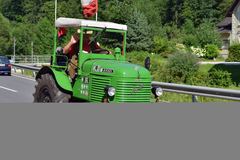
Steyr began series production of tractors in 1947 at the former Nibelungenwerk in St. Valentin, Upper Austria, drawing on diesel engine know-how the group had previously gained in vehicle manufacturing. Early types such as the Steyr 80 and Steyr 180, with single- and twin-cylinder diesels, formed the entry and mid-range of the post-war line-up before larger multi-cylinder models followed. These engines built on diesel know-how Steyr had already gained before the war in vehicle production, giving them unusual durability for their time.
Read on 3 more paragraphs
The register lists 2 variants at 9.5 to 19 kW from single- to twin-cylinder diesels of 1,330 to 2,660 cc, kerb weights of 1,210 to 1,800 kg, lengths of 2,720 to 2,820 mm, widths of 1,475 to 1,515 mm, heights of 1,500 to 1,770 mm and a rated 1,500 to 1,600 rpm.
These early Steyr types motorised Austrian farming in the post-war years and competed directly with Lanz, Eicher and Deutz's first single-cylinder models; Steyr used them to build the base for its later position as Austria's leading tractor maker.
On these single- and twin-cylinder tractors, compression, the cooling circuit and the condition of the injection pump matter, along with the clutch, gearbox and rust on sheet metal and wings; parts are available through Steyr vintage clubs and specialist dealers, with drivetrain wear parts sometimes remade; the cooling system's tightness after decades of use is also worth checking before buying.
Sources: SpecCodex register, model data: Steyr 13, Steyr (manufacturer)
Models
Tractor in 3D section
Turn the model, look inside and click an assembly — each one is explained.
