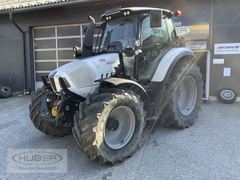
Sdf Lamborghini Victory-Baureihe
2 models in this series
Lamborghini Victory series: heavy agricultural tractors from Cento/Pieve di Cento, from the 230 VICTORY to the 260 VICTORY, 169.3 to 191.2 kW, approved for diesel and biodiesel
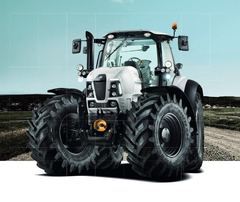
Lamborghini Trattori was founded in 1948 by Ferruccio Lamborghini in Cento and has been part of the SAME group since 1972, which builds the tractors at the Pieve di Cento plant. This page collects the Victory series, from the 230 VICTORY to the 260 VICTORY; the leading number gives the approximate horsepower.
Read on 3 more paragraphs
The register lists 2 versions from 169.3 to 191.2 kW from six-cylinder diesel engines of 7,146 cm³ displacement and 890 to 1,010 Nm of torque at 2,350 rpm, able to run on either diesel or biodiesel. Kerb weights range from 8,350 to 8,450 kg, lengths from 5,130 to 5,360 mm, widths from 2,490 to 2,670 mm, with a height of 3,225 mm.
Tractors of this power class rank among Lamborghini's large tractors for the heaviest tillage, cultivator work and hauling large trailer loads; the biodiesel approval was aimed at operations producing their own fuel from oilseed crops or wanting to rely on renewable feedstocks, an option that mattered most to large arable farms and contractors running high annual hours.
When buying a used example, check operating hours and the service history of engine, turbocharger and injection system, the condition of clutch and gearbox, the tightness of the hydraulics, and corrosion on frame, cab and wings; on biodiesel-fuelled examples it is also worth checking fuel lines and seals, which need to be suited to the different fuel.
Sources: SpecCodex register, model data: Lamborghini Victory-Baureihe, Lamborghini Trattori (manufacturer)
Models
Tractor in 3D section
Turn the model, look inside and click an assembly — each one is explained.