SAME (SLH) ANTARES II-Baureihe
1 model in this series
SAME (SLH) Antares II 110 (1996-2000): water-and-oil-cooled six-cylinder standard tractor with 80.9 kW output and 377 Nm of torque from the ANTARES II series
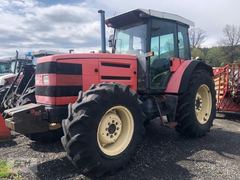
The Antares II 110 was built between 1996 and 2000 as part of the ANTARES II series under the SAME (SLH) designation and belonged to the more powerful six-cylinder standard tractors of this period.
Read on 3 more paragraphs
The six-cylinder engine runs on a combination of water and oil cooling, displaces 6,000 cm³ and delivers 80.9 kW at 2,500 rpm, equivalent to 110 horsepower, with 377 Nm of torque. With a weight of 4,650 kg, a wheelbase of 2,750 mm and a top speed of 40 km/h, the Antares II 110 was built for both heavy drawbar work and brisk road travel.
The combination of water and oil cooling differs from the pure air-and-oil cooling of older SAME models: a classic water radiator handles the main cooling here, while an additional oil cooler stabilises lubricant temperature under full load. This design was common on more powerful six-cylinder engines of the 1990s, since water cooling alone reaches its limits at high continuous output.
When buying a used Antares II 110, both the water radiator and the oil cooler should be checked for leaks, since a failure of either system in this combined cooling concept can quickly lead to overheating. The braking system also deserves particularly thorough inspection given the 40 km/h top speed, which is high for a standard tractor. Given the tractor's age, the wiring harness around the engine bay also deserves a visual check, since heat from the combined cooling system can make insulation brittle over time.
Sources: SpecCodex-Register: Kennwerte des Modells ANTARES II 110
Models
Tractor in 3D section
Turn the model, look inside and click an assembly — each one is explained.