Pfau Other models
1 model in this series
Compact commercial vehicle S 85 (2004–2005): 1,480 mm width, 2,090 mm wheelbase, 1.4-litre four-cylinder engine and 1,900 kg gross weight
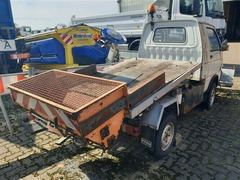
Vehicles of this size belong to the compact end of the van class: at 1,480 mm width and 2,090 mm wheelbase, this model is markedly narrower and shorter than a series-production panel van, closer in scale to a small estate car or micro-van. The four-cylinder engine with 1,371 cc displacement matches the engine sizes common in compact cars and small vans during the 2000s.
Read on 3 more paragraphs
At 1,900 kg gross vehicle weight and 820 kg kerb weight, the payload works out at a comparatively large figure of just over 1,000 kg for such a compact vehicle. The narrow 1,480 mm width allows use on tight lanes and passages too small for a standard-width van. The short 2,090 mm wheelbase gives a small turning circle, at the cost of stability at higher speed.
At 1,900 kg gross vehicle weight, the vehicle sits well below the 3,500 kg threshold and so falls firmly into EU category N1, drivable on a category B licence. The narrow build is typical of vehicles designed for lanes and passages where a standard van, roughly two metres wide, would no longer fit.
On such a narrow and light commercial vehicle, it is worth checking the steering components and front suspension for play, since the short wheelbase puts more strain on the axles on uneven ground. The small four-cylinder engine should be checked for oil consumption and spark-plug condition, typical wear points on vehicles of this age. The bodywork and frame at the load-bed mounting points also deserve a look for rust, since small vans of this type were often used in constant commercial service.
Sources: SpecCodex-Register: Kennwerte des Modells S 85
Models
Van in 3D section
Turn the model, look inside and click an assembly — each one is explained.
