Mechtric JL3
5 models in this series
Mechtric JL3 – three-phase motor, frame sizes 80 to 100: four-pole, 0.75 to 3 kW, IP55/IP65 protection, MEPS-registered with a universal mounting code
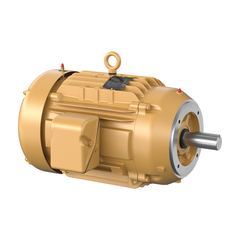
JL3 is a three-phase motor range registered under the Mechtric brand to Australia's GEMS/MEPS energy efficiency standard. The five versions listed cover frame sizes 80, 90 and 100, each with a suffix S1, L1, L2 or the plain frame designation 802-4 in the type name; all variants are four-pole.
Read on 3 more paragraphs
The register lists five versions with 0.75 to 3 kW rated output, four poles throughout, and an efficiency span of 81 to 87.58% at full load and 82.55 to 88.42% at 75% load. Protection ranges from IP55 to IP65, frame size from 80 to 100. Manufacturing takes place in China, tested under the 2019 GEMS determination for three-phase motors, using test method A throughout. The mounting code covers practically the whole IEC spectrum across all five versions, from foot forms B3 and B5, through flange forms B14, B34 and B35, to vertical forms V1, V3, V5, V6, V15, V18 and V36.
With this breadth of mounting options, the JL3 motors are designed as versatile small drives that can be adapted to pumps, fans, conveyor belts or other light industrial applications without changing range, depending on whether foot, flange or vertical mounting is needed.
When buying used or swapping, check bearing condition, insulation resistance of the winding, visible overheating traces on the terminal box and fan cover, and a legible nameplate showing frame size, protection class and efficiency value. Given the wide choice of mounting codes, it is worth checking before purchase which of the many bolt patterns actually fits the installation point.
Sources: SpecCodex register, model data: Mechtric JL3
Models
Electric motor in 3D section
Turn the model, look inside and click an assembly — each one is explained.
JL3 100L1-4
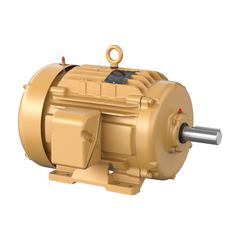
The Mechtric JL3 100L1-4 is a three-phase induction motor from the JL3 series. The rated output is 2.2 kW. The motor...
JL3 100L2-4
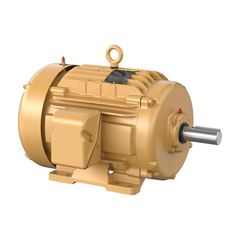
The JL3 100L2-4 belongs to the JL3 series from Mechtric. The rated output is 3 kW. The motor is four-pole, which at...
JL3 90L-4
The Mechtric JL3 90L-4 comes from the JL3 series. The rated output is 1.5 kW. The motor is four-pole, which at 50 Hz...
MechtricJL3 802-4no photoJL3 802-4
With the JL3 802-4, Mechtric offers a three-phase induction motor in the JL3 series. The rated output is 0.75 kW....
MechtricJL3 90S-4no photoJL3 90S-4
The JL3 series from Mechtric includes the JL3 90S-4. The rated output is 1.1 kW. The motor is four-pole, which at 50...
