Liebherr D936
6 models in this series
Liebherr D936 – 10.5-litre six-cylinder diesel engine: EPA-certified from 2012 to 2026, 230 to 270 kW, Tier 4 Final/Interim, maximum torque up to 1,915 Nm
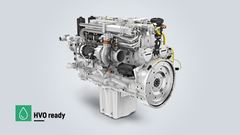
The D936 is Liebherr's six-cylinder inline engine with around 10.5 litres of displacement, derived from a bore and stroke of 122 and 150 mm respectively; the EPA engine-family codes confirm this displacement via the code 10.5. The register carries the D936 A7 and D936 A7 SCR versions as well as the A7-04, A7-05, A7-24 and A7-25 variants.
Read on 3 more paragraphs
The register lists here 6 versions with 230 to 270 kW rated output at 1,900 to 2,000 rpm, from model years 2012 to 2026. Maximum torque ranges from 1,470 to 1,915 Nm at 1,350 to 1,500 rpm. The engines are certified to Tier 4 (Final or Phase-in) and to Interim Tier 4, and sit entirely within the 130 to 560 kW power category. For individual versions, the register carries several engine-family designations from different certification years, matching the long span of model years.
With a certification span of over a decade, the D936 shows the long service life of a proven industrial engine range used in construction machinery and materials-handling equipment; in the power segment around 230 to 270 kW, Liebherr competes here with Deutz, Cummins and Volvo Penta.
On a used purchase, operating hours and the service history of the injection system count, along with the condition of the turbocharger, the tightness of the charge-air ducting, and on SCR versions the function of the catalyst and AdBlue dosing; given the long production run, it is worth checking the exact model year against the emission stage that applied at the time. Cooling system and parts supply run through the Liebherr sales network.
Sources: SpecCodex register, model data: Liebherr D936, Liebherr (manufacturer)
Models
Diesel engine in 3D section
Turn the model, look inside and click an assembly — each one is explained.
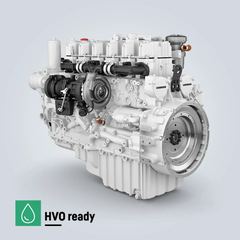
D936 A7
The D936 A7 from Liebherr is part of the D936 series. Production: 2012. The fuel is 7-15 ppm Ultra Low Sulfur...
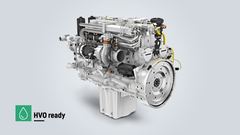
D936 A7 SCR
The D936 series from Liebherr includes the D936 A7 SCR. Production: 2012. The fuel is 7-15 ppm Ultra Low Sulfur...
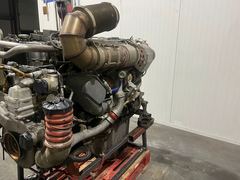
D936 A7-04
The Liebherr D936 A7-04 belongs to the D936 series. Production: 2014. The fuel is 7-15 ppm Ultra Low Sulfur Diesel....
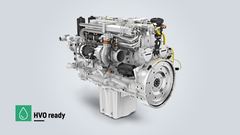
D936 A7-05
The Liebherr D936 A7-05 is a model in the D936 series. Production: 2021. The fuel is 7-15 ppm Ultra Low Sulfur...
D936 A7-24
With the D936 A7-24, Liebherr offers a model from the D936 series. Production: 2017. The fuel is 7-15 ppm Ultra Low...
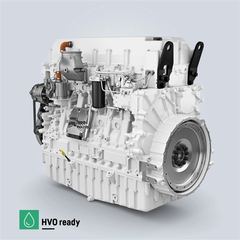
D936 A7-25
The D936 A7-25 from Liebherr is part of the D936 series. Production: 2024. The fuel is 7-15 ppm Ultra Low Sulfur...
