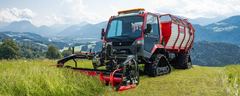
Intertrac Unitrac
2 models in this series
Intertrac Unitrac UT 45 – water-cooled four-cylinder diesel tractor with 33.1 kW (45 hp) and an eight-speed gearbox for drawbar work on medium-sized plots, built in 1969.
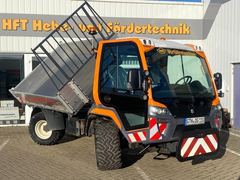
The Unitrac UT 45, from 1969, is a four-cylinder diesel tractor with a water-cooled engine of 2,456 cm3 displacement, producing 33.1 kW (45 hp). Names such as "Unitrac" stood, with several makers of the period, for versatile base tractors that, besides classic drawbar work, also served as carrier vehicles for mounted implements.
Read on 3 more paragraphs
The four-cylinder, water-cooled engine of 2,456 cm3 sits in the class of medium-small field tractors of the late 1960s, its 45 hp sufficient for ploughing, harrowing and light trailer work on medium-sized plots. Power reaches the wheels through an eight-speed forward gearbox, giving a fine spread of travel speeds for this power class.
A water-cooled four-cylinder diesel of around 2.4 litres was, by the late 1960s, the standard power unit for the medium family farm: strong enough for a three-furrow plough, economical enough for daily yard use. The power take-off of such tractors mostly ran at the standard 540 rpm of the period, the three-point linkage to the ISO 730 categories.
On a tractor this old, the true value depends on the condition of the crankshaft, cylinder bores and injection pump, regardless of its paperwork. An eight-speed gearbox should be checked for clean engagement of every gear and for oil leaks at the shaft seals. Rust on sheet-metal parts and the condition of the brake linkage belong on the checklist too; parts for rare models of this kind are often only found through specialists.
Sources: SpecCodex-Register: Kennwerte des Modells Intertrac Unitrac UT 45
Models
Tractor in 3D section
Turn the model, look inside and click an assembly — each one is explained.