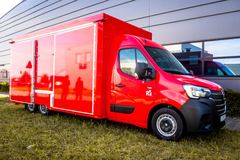
Innovan Other models
2 models in this series
Innovan – other models: VKW-OPB-380 and VKW-OPB-400, 2.3-litre four-cylinder engine, kerb weight 3,163 to 3,188 kg at a 3.5 t gross vehicle weight, length 6,340 to 6,660 mm
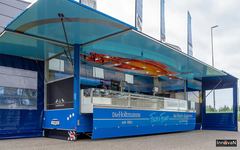
This collective page lists two versions under the register name Innovan, designated VKW-OPB-380 and VKW-OPB-400. Both models share the same 2.3-litre four-cylinder engine and differ mainly in body length and kerb weight.
Read on 4 more paragraphs
The register lists 2 versions with a consistently 2,299 cc four-cylinder engine, kerb weights of 3,163 to 3,188 kg at a gross vehicle weight of 3,500 kg, lengths of 6,340 to 6,660 mm and widths of 2,410 to 2,550 mm.
With a payload of only around 312 to 337 kg alongside a large body length and width, these are vehicles whose gross vehicle weight is largely taken up by the body itself – a typical picture for specially equipped box bodies such as refrigerated units, mobile workshops or special-purpose vehicles on a 3.5-tonne chassis.
At exactly 3,500 kg gross weight, both versions sit right on the upper edge of EU class N1: a single kilogram more would tip them into class N2, with its C1 licence, tachograph and toll requirements. That is precisely why the payload on these heavy special bodies is calculated so tightly that every extra kilogram of body weight comes straight off the payload.
When buying such conversions, key points are the proper attachment of the box to the chassis, corrosion at the mounting points, the condition of the clutch and gearbox on the four-cylinder engine, and the brakes and suspension under the heavy body load. Spare parts for the engine and chassis are supplied by the open commercial-vehicle trade; for the body itself, usually only the respective manufacturer remains a source.
Sources: SpecCodex register, model data: Innovan
Models
Van in 3D section
Turn the model, look inside and click an assembly — each one is explained.