Flt Other models
7 models in this series
FLT – other models: light and medium trailers outside the named series, types from FL 1.0 PL to FL 4.5 DL, 400–3,460 kg kerb weight and 1,000–4,500 kg gross vehicle weight
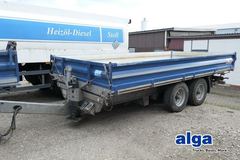
This page gathers the FLT trailers that the register could not assign to a named series. The range spans from small single-axle trailers to tandem-axle units at the upper end of the weight range; type designations such as FL 2.1 DL or FL 4.5 PL combine a code number with one or two letters denoting the version. As a collection page, it gathers the model variety that falls outside the series maintained separately in the register.
Read on 3 more paragraphs
The register lists 7 versions here with kerb weights from 400 to 3,460 kg, gross vehicle weights from 1,000 to 4,500 kg and widths from 1,860 to 2,300 mm.
With gross vehicle weights up to 4.5 tonnes, the range covers the classic segment of braked car and transport trailers used in trades, landscaping and light goods haulage, competing directly with the many small and medium-sized European trailer builders in this segment. The payload on most versions clearly exceeds the kerb weight, making them attractive for both private use and light commercial haulage.
When buying one of these trailers used, check the frame for rust and distortion, the overrun brake and its pads, axles and wheel bearings, tyres and lighting, and on box bodies the floor and tarpaulin. Parts for axles, lighting and brakes are usually easy to source through the general trailer-parts trade, while brand-specific fittings come only from the manufacturer. The condition of the registration papers and the validity of the roadworthiness inspection are also worth checking before purchase.
Sources: SpecCodex register, model data: FLT (weitere Modelle)
Models
Trailer in 3D section
Turn the model, look inside and click an assembly — each one is explained.
FL 4.5 DL
The FL 4.5 DL comes from Flt. Production: 1985. The vehicle is 2,280 mm wide. The unladen weight is 3,460 kg. The...
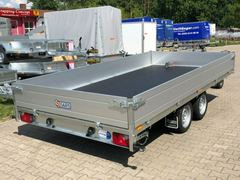
FL 4.5 PL
The Flt FL 4.5 PL is a vehicle built by Flt. Production: 1986. The vehicle is 9,100 mm long and 2,200 mm wide. The...
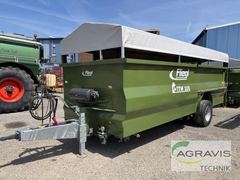
FL 1 0 PL
FL 1 0 PL comes from the manufacturer Flt. According to the available register data, the vehicle dates from 1994....
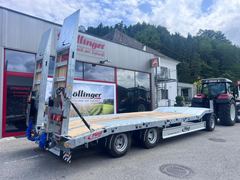
FL 2.1 DL
Flt builds the FL 2.1 DL. According to the available register data, the vehicle dates from 1989. Dimensions: 1,950...
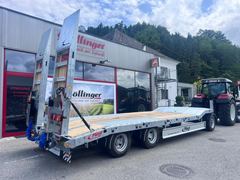
FL 3.0 DL
FL 3.0 DL comes from the manufacturer Flt. According to the available register data, the recorded vehicles date from...
FltFL 3.5 AWno photoFL 3.5 AW
The Flt FL 3.5 AW is a vehicle built by Flt. Production: 1983-1983. The vehicle is 2,160 mm wide. The unladen weight...
FltFL2.0 BLno photoFL2.0 BL
Flt builds the FL2.0 BL. According to the available register data, the vehicle dates from 1988. Dimensions: 2,070 mm...
