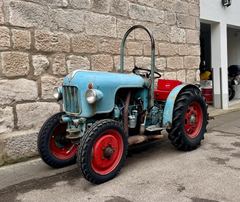
Eicher Raubtierreihe
2 models in this series
Eicher predator range – 3002 HR A Mammut and ES 201 Puma: from Bavaria to the farmyard, 1,963 to 3,927 cc displacement, two- to four-cylinder engines and 1,190 to 2,875 kg
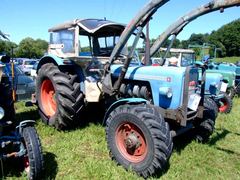
Eicher built its tractors in Bavaria, with plants at Forstern and Dingolfing, and named its 1960s ranges after big predators and wild animals, from Puma and Tiger to the particularly powerful Mammut. This page brings together two representatives of that naming tradition: the small Puma and the large Mammut, showing the span of the predator range from entry level to the top class.
Read on 3 more paragraphs
The register lists 2 variants with 20.5 kW, or 28 hp, of power from two- to four-cylinder engines of 1,963 to 3,927 cc displacement at a rated speed of 2,000 rpm and 108 Nm of torque. Unladen weights range from 1,190 to 2,875 kg, dimensions from 2,370 to 3,620 mm in length, 890 to 1,900 mm in width and 1,110 to 2,350 mm in height.
By naming its models after predators, Eicher pursued an unusually memorable brand identity for the industry in the 1960s, positioning itself alongside Fendt, Deutz and Fahr in the West German tractor market. The wide span between the compact Puma and the heavy Mammut shows how broadly the range served different farm sizes.
When buying used, pay close attention to the specific model given the differing engines across the range, as parts are not interchangeable between the two- and four-cylinder variants. Clutch, gearbox and hydraulics should be checked for wear, and the bodywork for rust. An active network of collectors and specialist parts dealers exists for Eicher classics.
Sources: SpecCodex register, model data: Eicher Raubtierreihe
Models
Tractor in 3D section
Turn the model, look inside and click an assembly — each one is explained.