Propellers for drones
Manufacturers in this group:
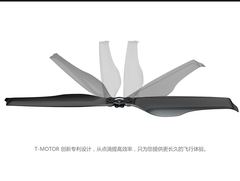
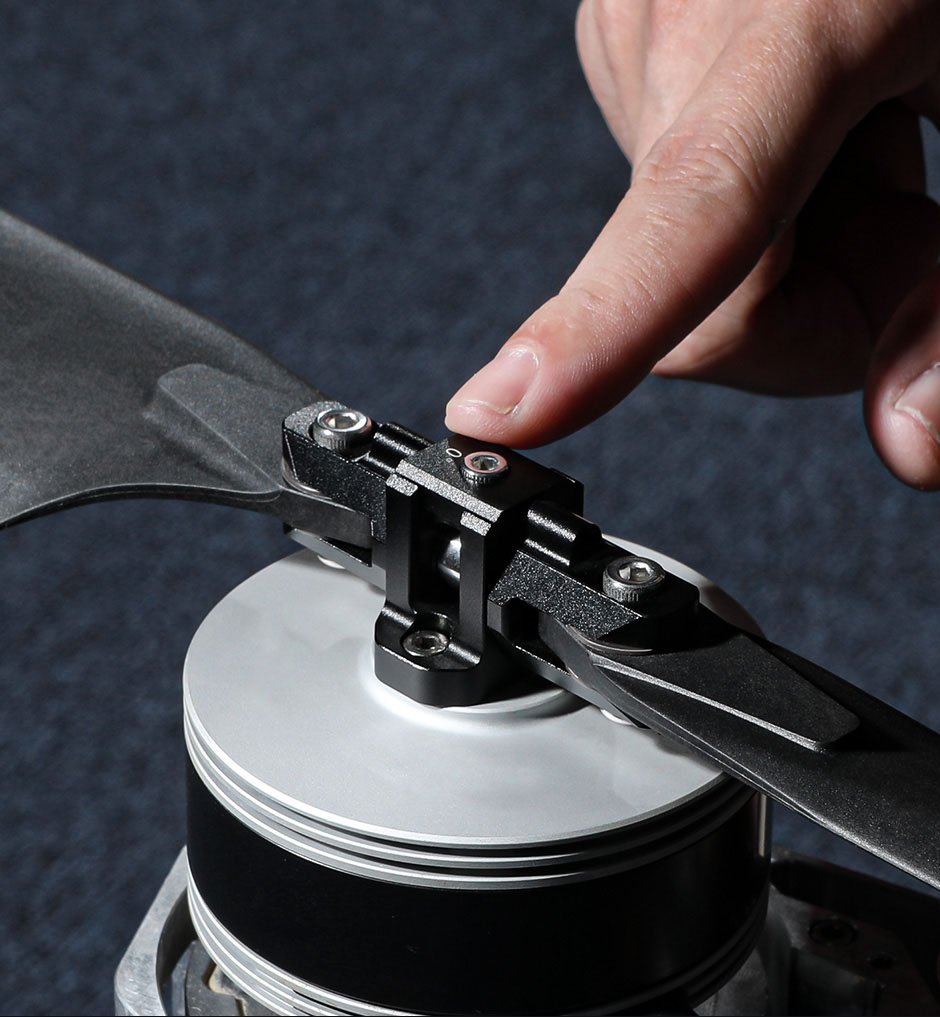 T-MOTOR MF2211 Polymer Folding Propeller
Propellers convert the motor's torque into thrust. Diameter, pitch, blade count and material determine thrust, efficiency and noise.
Blade count
Number of propeller blades. More blades increase thrust at the same diameter but usually reduce efficiency.
Diameter (mm)
Diameter in millimetres, only where the manufacturer or dealer states it in mm (not converted). For Gemfan it is the disc diameter, which can differ from the inch size.
Diameter (inches)
Nominal propeller diameter in inches, the usual size designation in trade. Larger propellers are more efficient at low speed but need motors with more torque and a low KV.
Folding
True when the blades can be folded for transport. Folding propellers save packing space; the blade seating in the hub must be clean to avoid imbalance.
Weight per blade (g)
Weight of a single blade, given for folding propellers and blades weighed individually. To compare with complete propellers, multiply by the blade count and add the hub.
Weight (g)
Weight of the propeller, pair or set as stated by the manufacturer (the unit is given in the note). Lighter propellers reduce inertia and make control easier.
Material
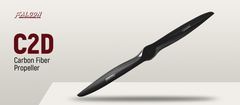
Blade material, for example carbon fibre with epoxy, polymer with carbon fibre, polycarbonate or glass-fibre-reinforced nylon. Carbon fibre is stiff and light; plastic is cheaper and breaks more benignly on ground contact.
Maximum speed (rpm)
Upper speed limit according to the manufacturer. Definitions differ (recommended maximum, hover limit or a value calculated from a formula), so values are not directly comparable across manufacturers.
Maximum thrust (kg)
Thrust limit of the propeller in kilograms stated by the manufacturer. For Mejzlik these are simulated values; actual thrust depends on the motor.
Hub bore (mm)
Inner diameter of the hub or shaft seat in millimetres. It must match the motor shaft or adapter.
Pitch (inches)
Theoretical forward travel per revolution in inches. Higher pitch gives more thrust in forward flight but loads the motor more; hover-oriented multirotors tend to use low pitch.
The propeller follows from frame size and motor: a larger diameter at lower speed is more efficient but needs low-KV motors. Hover-oriented multirotors usually use low pitch; fixed-wing and fast FPV drones higher pitch. Carbon fibre is stiff and light and suits large industrial drones, while plastic propellers are cheaper and typical of small FPV drones. The hub bore must match the motor shaft. Maximum speed and thrust limits are defined differently by each manufacturer and are only comparable within one brand.
Diameters in mm are only given where the manufacturer states them in mm; nothing was converted.
Mejzlik thrust values are simulated according to the datasheet.
What does a designation like 15x5 mean?
The first number is the diameter, the second the pitch, both in inches.
Are more blades better?
More blades give more thrust at the same diameter but usually cost efficiency. They are used when there is no room for larger propellers.
Why must propellers be balanced?
Imbalance causes vibration that disturbs the flight controller's IMU, loads the bearings and blurs images.