Turbocharger: Functioning of turbine
Turbocharger: Functioning of turbine, compressor and boost pressure: technology, functional process, typical errors and diagnosis explained clearly – without.
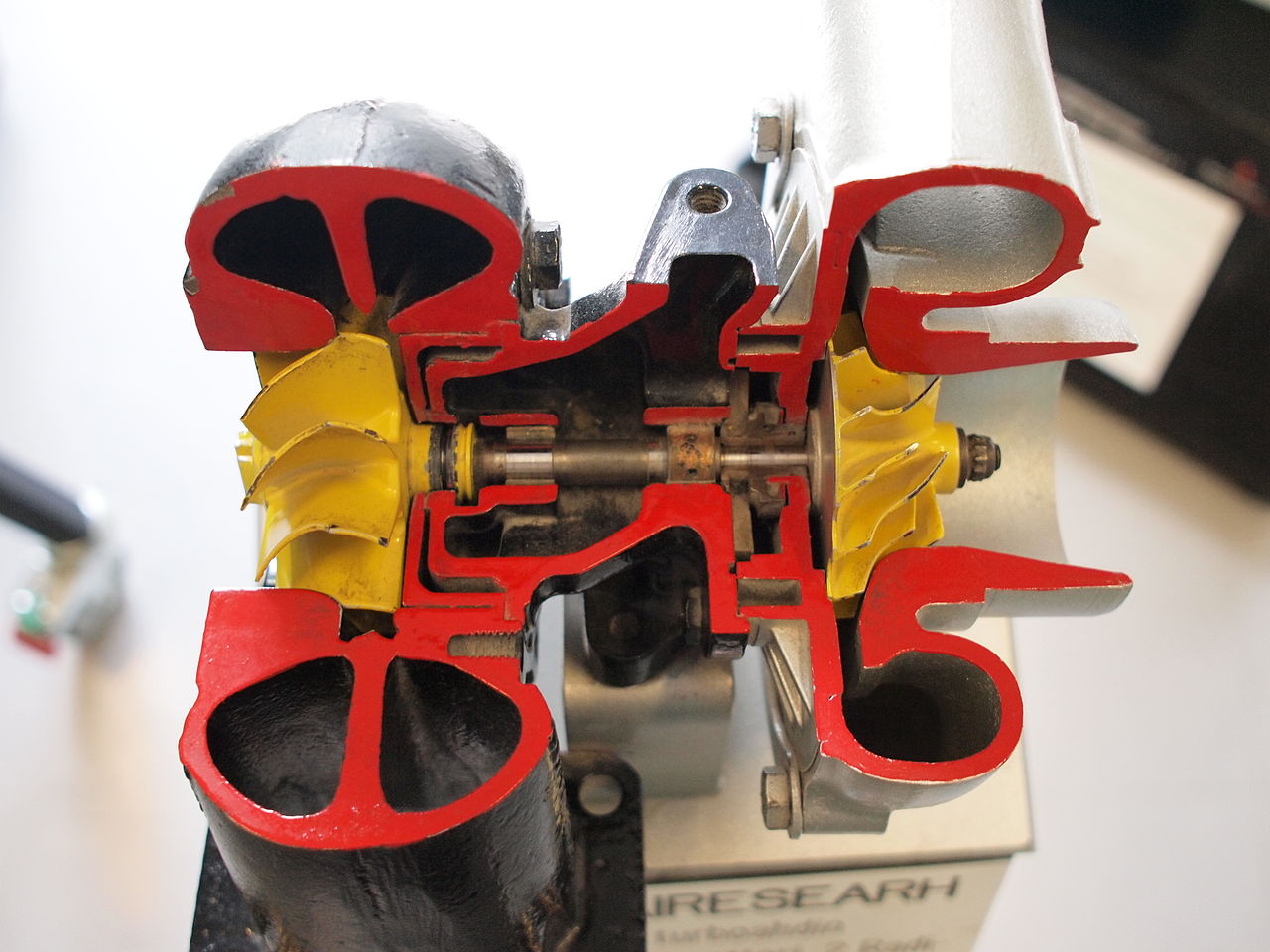
Photo: Tommi Nummelin, CC BY-SA 3.0, via Wikimedia Commons
The turbocharger uses energy of the exhaust gas flow to drive a compressor via a common shaft. This increases the air mass available to the engine for combustion.
The text places the topic in a technical context and separates the operating principle, typical faults, and reliable test steps from each other.
Concrete numerical values are deliberately not generalized because they depend on engine family, version, and manufacturer approval.
Turbocharger: Task in the Drive
This increases the air mass available to the engine for combustion. The decisive factor is not a single component, but the interaction of air flow, fuel supply, mechanical sealing, and timing control. An internal combustion engine often reacts to deviations with similar symptoms, although the causes differ. Therefore, the function should first be understood as a process: the cylinder must be properly filled, the medium must be appropriately compressed, combustion must start at the intended moment, and the resulting gases must be expelled again. Only when this chain is considered separately can a fault be sensibly narrowed down.
From Principle to Operation: Turbocharger
The turbocharger uses energy of the exhaust gas flow to drive a compressor via a common shaft. This increases the air mass available to the engine for combustion. The exact sequence depends on motor design, load condition, and control strategy. In practice, it is important not to confuse cause and effect. A conspicuous measurement value can indicate the actual cause, but it may also only be the engine control unit's reaction to another fault. Mechanical basic conditions, air supply, fuel and ignition or injection therefore form the fixed test order. This keeps the diagnosis understandable even when multiple control loops act simultaneously.
How Turbocharger Is Constructed
The topic complex specifically includes turbochargers, turbines, compressors, boost pressure, and exhaust. These components do not operate independently. Sensors detect operating states, actuators modify air or fuel paths, and mechanical parts determine sealing and movement. In modern engines many deviations are detected electronically, but a plausible electrical signal does not yet prove a mechanically flawless condition. Conversely, a mechanical fault can lead to electrical control deviations. Therefore, parts should only be replaced when measurement, functional testing, or visible evidence actually supports the deviation.
Turbocharger: Common Faults and Causes
Oil shortage, foreign objects, leaks, dirty air passages, or boost pressure control errors can affect the speed build‑up, sealing, and efficiency of the turbocharger. It is important to formulate this as a suspicion, not as proof. Noise, smoke, odor, irregular operation, or a fault code can suggest a search direction, but are rarely definitive. Subsequent control actions can also dampen or shift symptoms. For example, a control unit can adjust injection, ignition timing, or air quantity without eliminating the mechanical cause. Anyone who immediately interprets the first conspicuous value as a defective component therefore easily overlooks leaks, supply influences, or a fundamental mechanical fault.
Loads That Turbocharger Must Withstand
The combustion process is strongly dependent on operating condition. Cold start, idle, acceleration, high load, and thrust operation impose different demands on mixture formation, ignition or injection, and on mechanical sealing. Temperature changes viscosity, component clearance, and evaporation behavior; load and speed change filling, pressures, and response times. Therefore, a fault should be examined in the condition in which it actually occurs. An unremarkable idle, for example, does not rule out a load‑dependent fault, and a cold‑start problem does not have to be reproducible with a warm engine.
How to Systematically Test Turbocharger
The diagnosis starts with the air filter, hoses, intercooler, exhaust path, and oil supply. Shaft or housing damage is only evaluated after external causes have been excluded. A reproducible procedure is sensible: document the fault pattern, inspect visible damage and connectors, secure existing fault entries and live data, then carry out targeted functional tests. Only after that do more elaborate mechanical measurements or disassembly work follow. Comparison values between cylinders are often more helpful than isolated numbers, provided test conditions are identical. Concrete target values, tightening torques, and limit dimensions must always match the exact engine variant and come from reliable manufacturer information.
Preventing Wear in Turbocharger
During maintenance on the engine and combustion, cleanliness, clear part identification, and documented baseline conditions are essential. Openings in the intake, fuel, or oil circuit should be protected from contamination. Sealing surfaces, lines, and connectors are not forced into place, but examined for the cause of a misalignment. After repair, the original fault pattern should be re‑checked under appropriate conditions. It is not only crucial whether a warning message has disappeared, but also whether engine operation, measurements, and control behavior are plausible again. Safety‑critical high‑pressure, ignition, and hot zones require the work procedures specified for the concrete system.
For turbochargers this also applies: a reliable repair decision results from several consistent findings. Before‑after comparisons, a cylinder comparison, and inspection of adjacent systems help separate random correlations from a genuine cause. When parts are removed, the installation position, visible traces, and contaminants should be documented. This keeps it clear whether a damage originated primarily or occurred as a consequence of another fault.
Frequently Asked Questions
What does “turbocharger” mean technically?
The turbocharger uses energy of the exhaust gas flow to drive a compressor via a common shaft. This increases the air mass available to the engine for combustion.
Which components are particularly relevant for this topic?
Relevant are primarily turbochargers, turbines, compressors, boost pressure, exhaust. Which components are actually present depends on the concrete motor design.
Which fault patterns can be associated with it?
Oil shortage, foreign objects, leaks, dirty air passages, or boost pressure control errors can affect the speed build‑up, sealing, and efficiency of the turbocharger. These symptoms, however, are not definitive and must be confirmed with measurements or functional tests.
How can the cause be sensibly tested?
The diagnosis starts with the air filter, hoses, intercooler, exhaust path, and oil supply. Shaft or housing damage is only evaluated after external causes have been excluded. The test steps should be documented and carried out under as reproducible conditions as possible.
Which specifications should not be adopted wholesale?
Concrete target values, pressures, dimensions, limit values, tightening torques, and setting values must not be transferred from general articles to a specific engine; the appropriate manufacturer documentation is decisive for that.
Published 2026-10-05 · Source: Redaktion SpecCodex
→ Engine and combustion — terms and articles
