Correctly document machine weight with work equipment
Correctly document machine weight with work equipment: reference points, equipment condition, source verification and typical errors in machine measurements explained compactly.
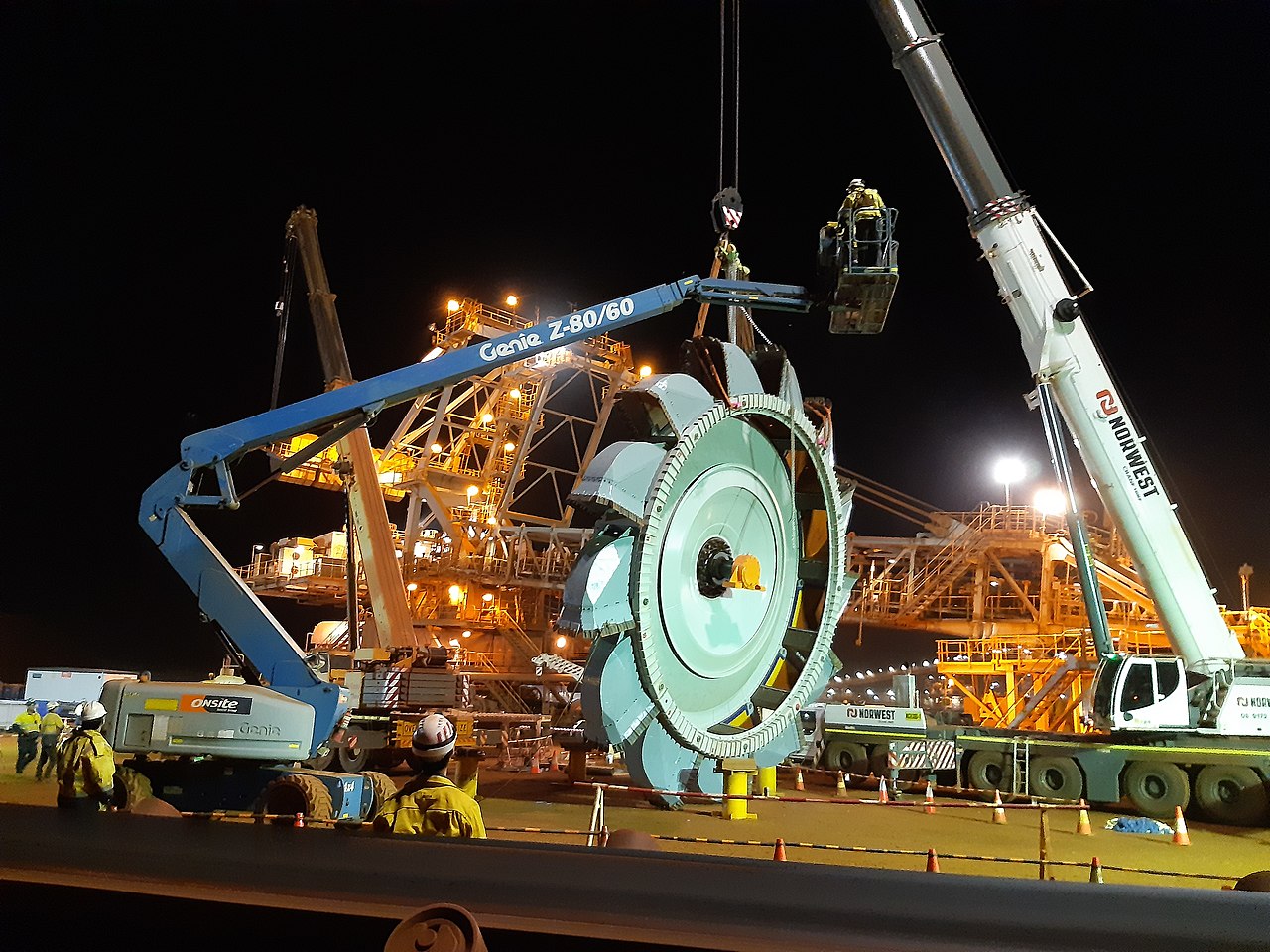
Photo: Calistemon, CC BY-SA 4.0, via Wikimedia Commons
Weight with work equipment is one of the technical specifications that often seem self‑evident for machines. However, it is not only the numeric value that matters, but what exactly was measured or weighed. Weight figures are only reliable when their definition is known. A number without information on setup, filling and equipment condition can be easily misinterpreted.
For a serious comparison, weight with work equipment must therefore always be read together with source, variant and measurement condition. It is especially important to distinguish it from the weight of the base machine and separate attachment weight. Those who keep these differences cleanly separated avoid false conclusions regarding transport, use and model comparison.
Correctly document machine weight with work equipment – overview
Weight with work equipment describes the mass of a machine including the specifically mounted work equipment or a named tool. Thus the figure is initially a technical assignment and not yet a universally applicable property of every version of a series. A manufacturer can offer the same model name with different chassis, superstructures or configurations. Therefore the value always raises the question of in which condition it was given. For databases it is advisable to take the original value unchanged and store its meaning in context. Otherwise a seemingly precise number quickly becomes unusable when later it is no longer traceable which variant it referred to. A different tool can change the total mass and its distribution, even though nothing changes on the base machine.
How equipment and variants influence correctly documenting machine weight with work equipment
The respective value can change due to tool type, quick‑change system, additional hydraulics, protective parts and ballast. This does not automatically mean that the technical source is contradictory. Often it merely describes a different configuration. Especially for machines with many options, a single value without variant reference is problematic. For a clean dataset, model, version, relevant equipment and the condition of movable components should be documented together. If a source lists multiple values as a range or table, a standard value may not be selected arbitrarily. It is better to assign them to the respective variants. If this assignment is missing, the record should keep the uncertainty visible rather than generate an apparently definitive number.
How a reliable measure for correctly documenting machine weight with work equipment arises
Weight with work equipment is typically measured or determined for the actually documented combination of base machine and equipment. The most important part of this formulation is the reference point. Technical drawings provide measurement aid lines, axle centers, outer edges or defined planes for this purpose. If such a representation is missing, the text of the source should be read carefully. Two numbers can look identical yet mean something different if they start or end at different points. Conversely, two differing values can both be correct when different reference points were used. Therefore the measurement reference should not be altered retroactively. If it is not documented, the indication is better marked as incomplete.
Practical significance of correctly documenting machine weight with work equipment
In practice, weight with work equipment is primarily important for transport, stability, axle loads, ground impact and the comparability of ready‑to‑use variants. The value should never be considered in isolation. For transport issues several external dimensions and weights often play a role simultaneously; for installation or hall planning additionally clearances, floor conditions and movement areas are relevant. A data sheet can provide a necessary basis but does not automatically replace checking the concrete situation. For used machines it must also be considered that later conversions may have altered the original series condition. Where space is limited, measuring the actual machine is more sensible than unverified adoption of a catalogue value.
What weight with work equipment is easily confused with when correctly documenting
Weight with work equipment is especially often confused with the weight of the base machine and separate attachment weight. Both figures can be related but answer different questions. A comparison is only meaningful if the data fields have the same technical meaning. For this, first the designation in the original source should be checked, then the measurement sketch and finally the described equipment condition. Translations are an additional source of error: a foreign‑language term can be used differently in catalogues depending on the manufacturer. Therefore the German field name should not carry more weight than the source. If the meaning remains unclear, an explanatory note is better than an overly tight translation.
Recognising common error patterns when correctly documenting machine weight with work equipment
A typical mistake is to compare a weight with tool to a bare base‑machine weight. Equally problematic is combining values from different brochures when it is not certain they refer to the same variant. Units and decimal separators must also be checked. For lengths, millimetres, centimetres and metres are easy to convert, but a missing unit field can distort a value by orders of magnitude. The same applies to weights for kilograms and tonnes. A metric tonne equals exactly 1000 kilograms. Where a value could only be estimated, it should not be added. Qualitative indications are technically cleaner in this case than an invented number.
Keeping sources and references clean when correctly documenting machine weight with work equipment
For a solid data base it is recommended: name the equipment condition visibly in the record and only sum separate individual masses when compatibility is documented. Additionally the original unit should be retained even if the database internally uses a second, normalised unit. With contradictory sources one should not average. First check whether variant, measurement reference, equipment or document status explains the difference. If the conflict cannot be resolved, both documented figures can be recorded with their respective source. This approach fits the basic idea of a technical register: show documented data clearly, keep uncertainty visible and do not replace missing entries with guesses.
Frequently asked questions
Published 2026-09-15 · Source: Redaktion SpecCodex
→ Dimensions and weight — terms and articles
