Electric motor on the frequency converter
Electric motor on the frequency converter explained: function, application, typical errors and practical notes for selection, testing, diagnosis, operation and maintenance.
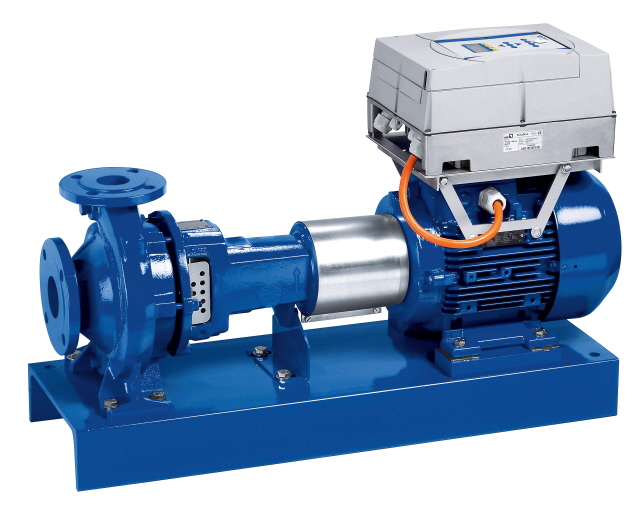
Photo: KSB Aktiengesellschaft, Frankenthal, CC BY-SA 3.0, via Wikimedia Commons
A frequency converter supplies the electric motor with variable frequency and voltage or regulated phase currents. The topic is important in practice because a motor only operates reliably when its electromagnetic principle, the power supply and the mechanical load match.
In practice, the most noticeable aspects are: a large adjustable operating range, controlled start and additional electrical stresses due to the pulsed output voltage. The technology can be found, among other things, in pumps, fans, conveyors, process machines, servo functions and energy-adapted drives. For specific connection or test values, the documentation of the actually installed motor is always decisive.
What Electric motor on the frequency converter technically means
The term therefore describes an operating context and not a separate motor type / design.
In practice the topic becomes relevant as soon as start, speed control, heating or diagnosis are assessed. A blanket statement without motor type and load condition is therefore usually too coarse.
Electric motor on the frequency converter: the mechanism behind it
Thus the magnetic field, speed and torque can be specifically adjusted to the operating point. In doing so, the electrical power supply, magnetic field and mechanical movement interact directly with each other.
If one of these points shifts, the current, torque and loss heat often change as well. This explains why identical motors on different loads or with different control can exhibit a markedly different behavior.
Electric motor on the frequency converter: consequences for motor and drive
Characteristic are a large adjustable operating range, controlled start and additional electrical stresses due to the pulsed output voltage. For assessment one should not consider current alone as an error indicator, but evaluate it together with speed, load and power supply.
Also the torque is not equally available over the entire operating range. Starting procedures and control shift the working point and can therefore affect both the mechanical load and the electrical stress.
Effects of Electric motor on the frequency converter on the motor
Thermally critical operation occurs especially when high currents persist for a long time, the cooling does not match the operating point, or many start events occur in quick succession.
Additionally, harsh torque changes, resonances or long acceleration phases can generate extra loads. The cause is therefore always to be found in the overall system of motor, load and control.
Where Electric motor on the frequency converter becomes practically important
This relationship is significant for pumps, fans, conveyors, process machines, servo functions and energy-adapted drives. It aids both in design and troubleshooting, because unsuitable operating conditions often first manifest in start time, current, temperature or noise.
For existing installations, a comparison with earlier operating data is worthwhile. A slow change over weeks or months can be more informative than a comparison with a generic target value.
Typical disturbances with Electric motor on the frequency converter and what they mean
Typical risks and misinterpretations are incorrect motor data, insufficient cooling at low speed, insulation stress, bearing currents and EMC problems. Frequently, symptoms are attributed to the motor, although the network, switching device, converter or load are the actual cause.
Measurements should therefore be carried out under known conditions. If load, speed or power supply vary greatly between two measurements, a direct comparison is only of limited usefulness.
Electric motor on the frequency converter: the path from observation to decision
Practical approach is: check motor parameters, current, temperature, cables, grounding, bearing condition and control behavior together. Afterwards the results can be compared with the original design and the manufacturer documentation.
For decisions it applies: consider motor approval, cable routing, cooling, speed range, load torque and appropriate converter parameters. Protection parameters, switching thresholds or limits should not be changed based on feeling, merely to make a fault disappear temporarily.
In practical use a clean separation between observation and cause is worthwhile. A noticeable current, a noise or an elevated temperature is initially only a finding. Only the comparison with load condition, power supply, earlier measurements and the mechanical condition turns it into a reliable technical statement.
If disturbances recur, every intervention should be documented. This includes operating condition, measurement point, measuring device, connection condition and the behavior after the action. This history prevents the same tests from being repeated multiple times without gaining insight and facilitates later cause analysis.
Safety and manufacturer specifications take precedence over general rules of thumb. Especially electrical test voltages, permissible temperatures, switching sequences and mechanical limits can differ between motor series. Where the exact implementation is unknown, a deliberately open statement is better than a technically plausible but unsupported figure.
In practical use a clean separation between observation and cause is worthwhile. A noticeable current, a noise or an elevated temperature is initially only a finding. Only the comparison with load condition, power supply, earlier measurements and the mechanical condition turns it into a reliable technical statement.
If disturbances recur, every intervention should be documented. This includes operating condition, measurement point, measuring device, connection condition and the behavior after the action. This history prevents the same tests from being repeated multiple times without gaining insight and facilitates later cause analysis.
Safety and manufacturer specifications take precedence over general rules of thumb. Especially electrical test voltages, permissible temperatures, switching sequences and mechanical limits can differ between motor series. Where the exact implementation is unknown, a deliberately open statement is better than a technically plausible but unsupported figure.
Frequently asked questions
Published 2026-10-06 · Source: Redaktion SpecCodex
→ Electric motors — terms and articles
