Select replacement motor correctly
Select replacement motor correctly in overview: technical relationships, typical applications, fault patterns as well as notes for diagnosis, operation and maintenance.
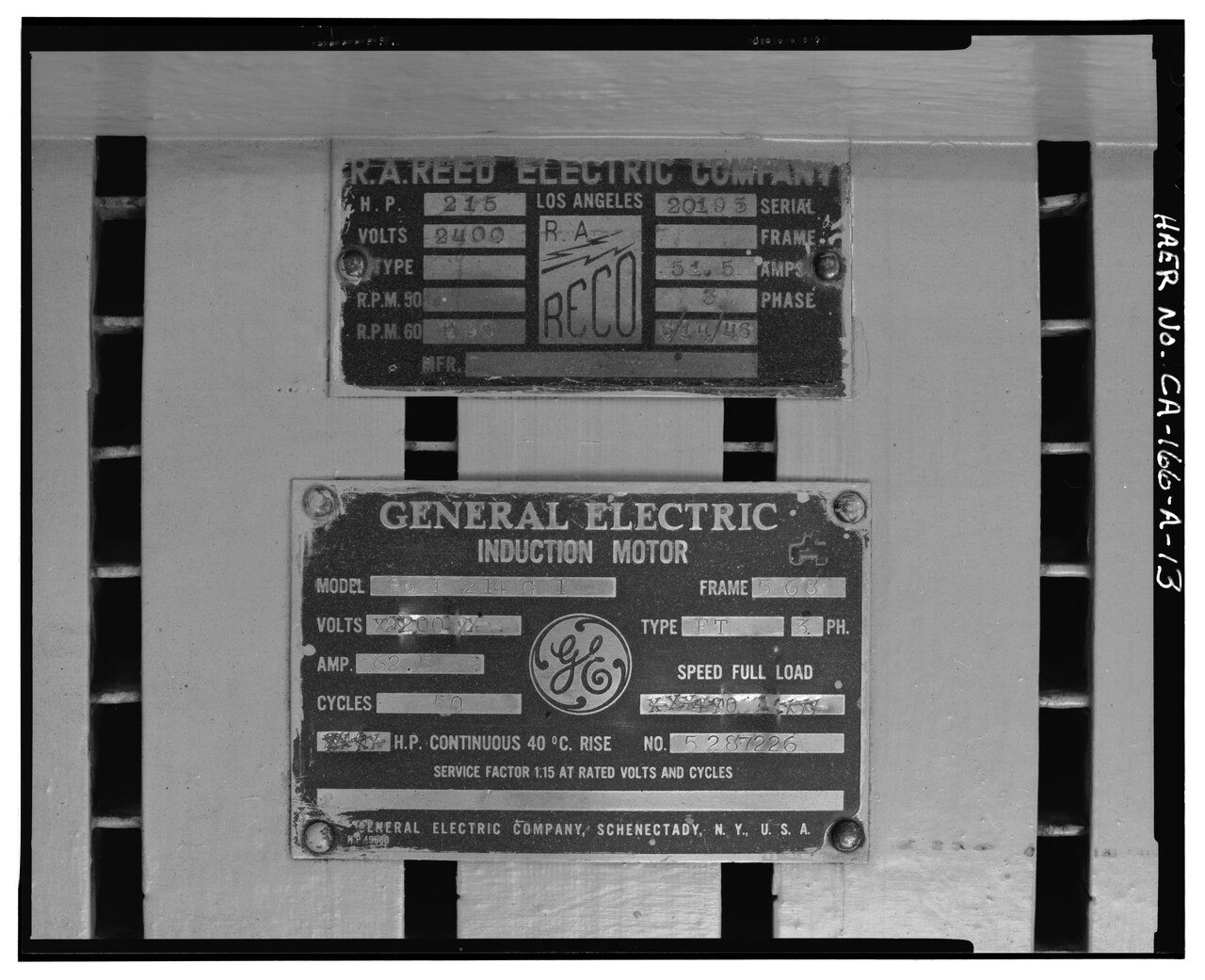
Photo: Wikimedia Commons, Public domain, via Wikimedia Commons
A replacement motor must match the existing machine electrically, mechanically, thermally and functionally. For maintenance and selection it is not enough to look only at the external design. The decisive factor is how field, rotor, supply and load interact in the specific drive.
This motor type is particularly suited for systematic data comparison, reducing mis‑purchases and consequential damage. It is used, for example, in maintenance, modernization and replacement of motors no longer supplied. Similarly appearing motors can differ significantly electrically and thermally, which is why data should never be taken from a neighboring model.
Why the selection is more than a power issue
A replacement is therefore not simply a search for a similar number on the nameplate.
Before ordering it should be clear which function the motor fulfills, how the load starts, how the speed is regulated and what boundary conditions apply at the installation site.
Matching electrical data
Electrically, the supply, motor concept, connection options, protection and control system must match. The same power rating alone guarantees neither the required start and operating torque nor appropriate cooling, connection data or controllability.
In inverter operation, motor release, feedback if present, cable situation and parametrizability must also be checked. Unknown data should not be taken from an optically similar motor.
Check mechanical fit
Mechanically, the shaft, mounting, installation space, connection layout and the forces from the coupled machine count. Systematic data comparison reduces mis‑purchases and consequential damage.
Even a seemingly small deviation can make assembly, alignment or cooling more difficult. Before removal, a complete photographic documentation with accessible dimensions and connection details is therefore worthwhile.
Understanding load, start and control
The load determines which start and operating torque is required. Typical applications are maintenance, modernization and replacement of motors no longer supplied.
A motor that turns smoothly at no load can be unsuitable for a heavy load. Conversely, unnecessary oversizing does not automatically lead to better operation and can degrade control or part‑load behavior.
Consider cooling and environment
Cooling and environment are part of the design. Dust, moisture, high ambient temperature, restricted airflow or low inverter speed change the thermal conditions.
Existing external fans, sensors, heating elements or special connection cables must be taken into account in the replacement, provided they belong to the original function.
Avoid typical mis‑decisions
Typical mis‑decisions are wrong speed, unsuitable supply, differing shaft or mounting, incorrect cooling concept and missing inverter release. Especially risky is to fill missing data with assumptions just so a replacement model appears to fit.
It is better to have an open gap in the documentation and a targeted query with the manufacturer or supplier. This prevents a speculation from later being passed on as a confirmed technical specification.
Practical checklist for replacement
As a practical check, fully document the old motor, record load and control, verify mechanical dimensions and compare manufacturer documents. Then the data of the candidate are compared line by line with the documented existing installation.
For the final selection it applies: in case of uncertainty choose a technically substantiated replacement rather than using similarity of housing or power as proof. Only when electrical, mechanical, thermal and control points match is a replacement technically plausible.
For daily diagnosis it is worthwhile to have a clear separation between observation and cause. A noticeable current, a noise or an elevated temperature is initially only a finding. Only the comparison with load condition, supply, earlier measurements and the mechanical state turns it into a reliable technical statement.
When recurring faults occur each intervention should be documented. This includes operating condition, measurement point, measuring device, connection state and the behavior after the measure. This history prevents the same tests from being repeated multiple times without gaining insight and facilitates later cause analysis.
Manufacturer data and safety specifications take precedence over general rules of thumb. Especially electrical test voltages, permissible temperatures, switching sequences and mechanical limits can differ between motor series. Where the exact implementation is unknown, a deliberately open statement is better than a technically plausible but unsubstantiated figure.
For daily diagnosis it is worthwhile to have a clear separation between observation and cause. A noticeable current, a noise or an elevated temperature is initially only a finding. Only the comparison with load condition, supply, earlier measurements and the mechanical state turns it into a reliable technical statement.
When recurring faults occur each intervention should be documented. This includes operating condition, measurement point, measuring device, connection state and the behavior after the measure. This history prevents the same tests from being repeated multiple times without gaining insight and facilitates later cause analysis.
Manufacturer data and safety specifications take precedence over general rules of thumb. Especially electrical test voltages, permissible temperatures, switching sequences and mechanical limits can differ between motor series. Where the exact implementation is unknown, a deliberately open statement is better than a technically plausible but unsubstantiated figure.
For daily diagnosis it is worthwhile to have a clear separation between observation and cause. A noticeable current, a noise or an elevated temperature is initially only a finding. Only the comparison with load condition, supply, earlier measurements and the mechanical state turns it into a reliable technical statement.
Frequently asked questions
Published 2026-09-23 · Source: Redaktion SpecCodex
→ Electric motors — terms and articles
