Vespa Other models
3 models in this series
Vespa – other models: the collective page with the Vespacar, the Vespacar P2 and the Vespacar PZ, single-cylinder 218 cm³ engine, kerb weight 466 kg, gross vehicle weight 999 kg, widths 1,350 to 1,470 mm

This page gathers the Vespa models the register could not assign to a named series: the Vespacar, the Vespacar P2 and the Vespacar PZ. Vespa is a brand of the Italian manufacturer Piaggio, headquartered in Pontedera; the Vespacar name was used for a light three-wheeled commercial vehicle with an enclosed cab, built on the brand's two-wheeler technology.
Read on 4 more paragraphs
The register lists 3 versions here with single-cylinder engines of 218 cm³ displacement, a kerb weight of 466 kg, a gross vehicle weight of 999 kg and widths of 1,350 to 1,470 mm.
With a single-cylinder engine, a kerb weight under 500 kg and a gross vehicle weight just under a tonne, the Vespacar counts among the three-wheeled micro-commercials that were common in tight town centres and for short delivery runs across southern Europe, where the scooter-derived narrow track and turning circle paid off in dense old-town streets and market squares.
When buying used, on a vehicle of this type check corrosion on the light sheet-metal body, the condition of the single-cylinder two-stroke engine and clutch, the function of brakes and electrics, the seal of the cab against weather, and parts supply, which runs through authorised Piaggio workshops and businesses specialising in scooters.
As a three-wheeled vehicle, the Vespacar legally falls not under the four-wheeled EU class N1 but under category L5e, set aside for mopeds and motor tricycles, which directly affects the licence category required, different from that for an ordinary panel van.
Sources: SpecCodex register, model data: Vespa, Piaggio
Models
Van in 3D section
Turn the model, look inside and click an assembly — each one is explained.
VESPACAR P2
The Vespa Vespacar P2 belongs to the family of three-wheeled light transporters that Piaggio developed from the...

VESPACAR PZ
The Vespa Vespacar PZ is a three-wheeled utility vehicle; built in 1978. The Vespacar is a three-wheeled light truck...
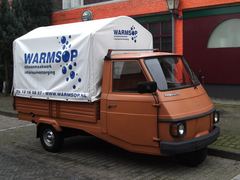
VESPACAR
The VESPACAR comes from Vespa. Production: 1983-1993. The engine has 1 cylinder. The vehicle is 1,470 mm wide. The...
