Uralets Other models
3 models in this series
Uralets – further models: the collective page for small tractors from Chelyabinsk, types 160, 180 and 220, diesel engines with 12 to 16 kW
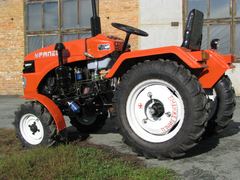
This page brings together the Uralets tractors that the register could not assign to a named series – the 160, 180 and 220 types. Uralets is a brand of small tractors from Chelyabinsk in Russia; the three-digit type designations rise with the power class. Alongside the large tractor plants, Russia is among the countries with many smaller, regional manufacturers of small and garden tractors.
Read on 3 more paragraphs
The register lists 3 versions here with 12 to 16 kW, or 16 to 22 hp, each fitted with a diesel engine.
Small tractors in this power class are used mainly on small agricultural plots, in private gardens and on smallholdings, where low weight and manoeuvrability matter more than high draught power; in Russia and the successor states of the Soviet Union, numerous smaller manufacturers serve this market segment alongside the large tractor plants. Buyers of such small tractors value above all the simple, repair-friendly technology without complex electronics, which allows servicing outside authorised workshops as well; the drawbacks are lower ride comfort and limited attachment options compared with larger farm tractors.
For a used Uralets, the condition and compression of the diesel engine, the tightness of the fuel system and cooling, the condition of the clutch and gearbox, and wear on the axles and tyres are the key checks. As with many smaller Russian tractor makers, spare parts are sourced mainly through specialist dealers. Equally important are the condition of the electrics and lighting and corrosion on the chassis and sheet metal parts.
Sources: SpecCodex register, model data: Uralets (weitere Modelle)
Models
Tractor in 3D section
Turn the model, look inside and click an assembly — each one is explained.
180
The Uralets 180 is a machine built by Uralets. The engine delivers 18 hp (13 kW). The engine is water-cooled. The...
Uralets160no photo160
The Uralets 160 is a machine built by Uralets. The engine delivers 16 hp (12 kW). The engine is water-cooled. The...
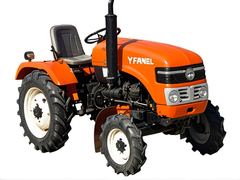
220
The Uralets 220 is a tractor from Uralets. The engine is rated at 16 kW. It runs with MFWD. It runs on diesel; the...
