Rolls Axle Other models
1 model in this series
Rolls Axle W 3295TRI: EU class O2 trailer with a gross weight of 3,500 kg, a length of 10,900 mm and six wheels, built in 1990
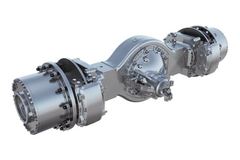
With a gross weight of 3,500 kg, the Rolls Axle W 3295TRI falls into EU trailer class O2, the medium-weight trailers up to 3.5 tonnes. Trailers in this class are usually fitted with an overrun brake. At an overall length of 10,900 mm and a gross weight of only 3,500 kg, this is an unusually long, lightly built trailer, of the kind used to carry bulky but light goods.
Read on 3 more paragraphs
An unladen weight of only 660 kg against a payload of around 2,840 kg is very low for a length of 10,900 mm, pointing to a particularly light frame construction. Six wheels spread the load across three axles; the 1,530 mm value recorded in the register is far too low to be the actual wheelbase for a vehicle nearly 11 metres long, and instead describes the spacing between the axles within the triple-axle group. The 1990 build year places the trailer before today's overrun brake standards.
For a combination with a trailer up to 3,500 kg, a category B licence is usually enough, provided the combination's gross weight does not exceed 3,500 kg; otherwise a category BE licence is required. Such a long, light trailer with a closely spaced triple-axle group is typically built for long but light loads such as pipes, ladders or boat hulls, and its length calls for particular care when reversing and manoeuvring.
When buying such a long, lightly built trailer from 1990 second-hand, the frame should be checked along its full length for bending and corrosion damage, since long, light structures are more sensitive to uneven loading. The closely spaced triple-axle group should be checked for even wheel loading, and the overrun brake for smooth operation. Spare parts for this specific, long design are often only available from specialist trailer builders.
Sources: SpecCodex-Register: Kennwerte des Modells Rolls Axle W 3295TRI
Models
Trailer in 3D section
Turn the model, look inside and click an assembly — each one is explained.
