Renault/szubert Other models
1 model in this series
Renault Master with a body by Szubert: four-cylinder engine of 2,299 cm³, 3,500 kg maximum gross weight, 4.33 m wheelbase and a top speed of 160 km/h
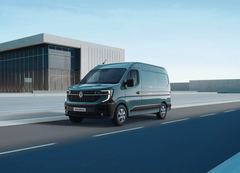
The basis of this vehicle is the Renault Master, a light commercial vehicle from the French manufacturer Renault, built for many years as a panel van, dropside and bare chassis for conversions. The register lists not Renault itself as the brand, but the body builder Szubert, who fitted the chassis with its own body. The registration is recorded for the year 2022.
Read on 3 more paragraphs
The engine has four cylinders and a displacement of 2,299 cm³. With a maximum gross weight of 3,500 kg and an unladen weight of 2,562 kg, the payload comes to around 938 kg. Length is 6.20 m, wheelbase 4.33 m and width 2.07 m, with a top speed of 160 km/h. The wheelbase is clearly longer than the body, pointing to a compact vehicle with overhang rather than a long box body.
At a maximum gross weight of 3,500 kg, the vehicle falls into EU class N1 and can be driven in most European countries on a category B licence. Vehicles in this class are subject to the rules for light commercial vehicles rather than the stricter requirements for trucks above 3.5 t. A payload of around 938 kg at a width of only 2.07 m points to a narrow but load-capable body.
Buying a used example like this means checking two separate areas: the chassis with its engine, gearbox and brakes as on any Master, and Szubert's own body with its own wiring, seals and frame mounting. Corrosion where chassis and body meet, leaking seams on the narrow body and the condition of the brakes deserve particular attention, as do the mounting points on the comparatively long wheelbase.
Sources: SpecCodex-Register: Kennwerte des Modells Renault Master (Szubert)
Models
Van in 3D section
Turn the model, look inside and click an assembly — each one is explained.
