Lau Other models
5 models in this series
Lau – other models: the collective page of trailers outside the named ranges, from the Fietsaanhangwagen to the OKH 2600 TB Alu, unladen weights from 620 to 2,460 kg, gross weights from 2,000 to 3,500 kg
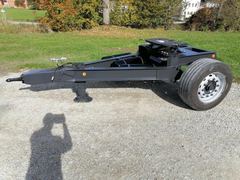
This page gathers the Lau trailers the register could not assign to a named range. The Dutch model name Fietsaanhangwagen – literally bicycle trailer – shows that the brand is carried in the Dutch market; the Alu suffix in OKH 2600 TB Alu marks an aluminium body. The Bikeliner and the OKH 2600 TB Alu and PH2000TB types cover light to medium payloads.
Read on 3 more paragraphs
The register lists here 5 versions with unladen weights from 620 to 2,460 kg, gross weights from 2,000 to 3,500 kg, a length of 5,680 mm and widths from 1,940 to 2,550 mm.
The span runs from the small bicycle trailer to the multi-purpose trailer of class O2, as used by tradespeople, campers and private owners for loads up to a gross weight of 3.5 tonnes; the aluminium version suits buyers for whom weight and corrosion resistance matter more than purchase price. The Dutch market offers many makers in this size class, so buyers comparing prices should look at payload and material quality rather than the brand name alone.
On the small trailers, the condition of the drawbar and jockey wheel count; on the aluminium bodies, dents and cracked welds instead of rust; also the condition of the tarpaulin or sides, the lighting and, where fitted, the overrun brake; spare parts for axles and couplings are usually available across manufacturers in these payload classes. On braked versions the adjustment of the overrun brake should also be checked, and on unbraked versions the permitted nose weight on the tow vehicle's coupling.
Sources: SpecCodex register, model data: Lau (weitere Modelle)
Models
Trailer in 3D section
Turn the model, look inside and click an assembly — each one is explained.
BIKELINER
The BIKELINER comes from Lau. Production: 2012-2022. The vehicle is 2,550 mm wide. The unladen weight is 2,460 kg....
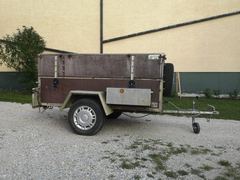
-
Lau builds this trailer. According to the available register data, the vehicle dates from 2012. Dimensions: 5,680 mm...
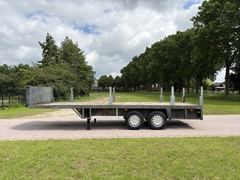
FIETSAANHANGWAGEN
The Lau FIETSAANHANGWAGEN is a vehicle built by Lau. Production: 2022. The vehicle is 2,550 mm wide. The unladen...
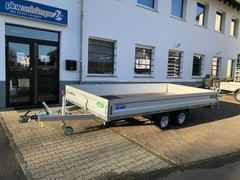
OKH 2600 TB ALU
OKH 2600 TB ALU comes from the manufacturer Lau. According to the available register data, the vehicle dates from...
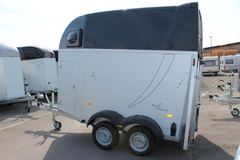
PH2000TB
Lau builds the PH2000TB. According to the available register data, the vehicle dates from 2003. Dimensions: 2,050 mm...
