Epple Buxbaum Other models
2 models in this series
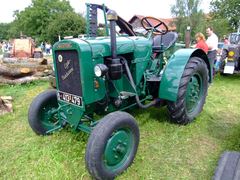
Epple-Buxbaum Rollmops: single-cylinder petrol light tractor from Austria with a frame construction, 10 hp and a top speed of only 6 km/h, built from 1927 to 1930

Epple-Buxbaum was an Austrian company that also built tractors during the interwar period; the Rollmops was made between 1927 and 1930, in the early phase of agricultural motorisation in Central Europe, when simple, small tractors were meant to replace draught animals on small farms.
Read on 3 more paragraphs
The single-cylinder petrol engine of 502cc produces 10 hp at 2,500 rpm and drives through a two-speed gearbox with one reverse gear. The Rollmops is built with a frame construction, weighs 1,250 kg and reaches a top speed of only 6 km/h – a figure close to walking pace.
With only two forward gears and a top speed of 6 km/h, the Rollmops was built for pulling simple mounted implements such as a plough or harrow, not for transport work. Petrol engines were common in small tractors of this early period because they started more easily from cold than the diesel engines of the time, even though they used more fuel.
When buying such an early tractor second-hand, the condition of the frame construction matters, particularly rust at the joints, since here – unlike in designs where the engine block itself is load-bearing – stability depends entirely on the frame. Also worth checking are the magneto ignition and carburettor of the petrol engine and the two-speed gearbox for wear; original parts today exist essentially only as custom-made reproductions or salvaged from other examples.
Sources: SpecCodex-Register: Kennwerte des Modells Rollmops
Models
Tractor in 3D section
Turn the model, look inside and click an assembly — each one is explained.