Diemach Other models
3 models in this series
Diemach DAW 007 - class O2 trailer with a gross weight of 3,500 kg, an unladen weight of 1,190 kg, a width of 1,710 mm and six wheels, built 2003
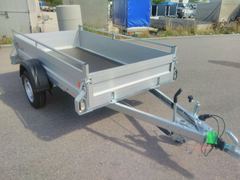
With a gross weight of 3,500 kg, the DAW 007 falls into EU trailer class O2, covering trailers between 750 kg and 3,500 kg, usually towed behind cars or light commercial vehicles with an overrun brake.
Read on 3 more paragraphs
The DAW 007 dates from 2003 and has an unladen weight of 1,190 kg; against the gross weight of 3,500 kg that leaves a payload of 2,310 kg, almost two-thirds of the gross weight. At only 1,710 mm wide, the trailer is noticeably narrower than the 2,550 mm allowed for trailers; with a wheelbase of 2,680 mm it stands on six wheels, more axles than its narrow build might suggest, arranged as two closely set axle pairs rather than a single axle line.
Towing it behind a car requires driving licence category B or BE, depending on the combination's gross weight. The narrow track combined with six wheels on a short wheelbase fits a trailer for narrow but load-stable cargo rather than a wide, enclosed body, and the extra axles spread the load over more contact points than a simple single-axle design would allow.
When buying such a narrow, multi-axle trailer used, check the condition of all axles and axle bearings, the function of the overrun brake and its linkage, corrosion on the frame and drawbar, and the state of the tyres, lighting and electrical connector. With six wheels in a tight space, it is also worth checking that the axles carry even loads and none has worn unevenly, since uneven wear on one axle often signals a bent frame or a seized bearing. Exactly one example of this type is registered in the Netherlands.
Sources: SpecCodex-Register: Kennwerte des Modells Diemach DAW 007
Models
Trailer in 3D section
Turn the model, look inside and click an assembly — each one is explained.
DAW 007
The Diemach DAW 007 is a vehicle built by Diemach. Production: 2003. The vehicle is 1,710 mm wide. The unladen...
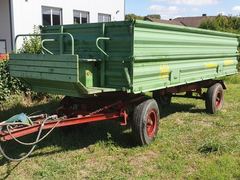
DAW-006
Diemach builds the DAW-006. According to the available register data, the vehicle dates from 2002. Dimensions: 2,320...
DiemachDAW 003no photoDAW 003
DAW 003 comes from the manufacturer Diemach. According to the available register data, the vehicle dates from 1998....
