David Brown VAK series
1 model in this series
David Brown VAK-1 (1945-1947) from Meltham, Yorkshire: the maker's first independent tractor model, water-cooled four-cylinder of 2,523 cc for kerosene or petrol, 35.5 hp/26.1 kW, 1,575 kg, only 1,110 mm wide
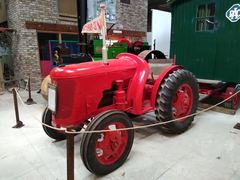
David Brown was a British tractor manufacturer based in Meltham, near Huddersfield in Yorkshire. The VAK-1 marked the start of David Brown's independent tractors, after the company had parted ways with its previous partner Harry Ferguson; the K in the designation stands for kerosene operation, as confirmed by the given fuel type of kerosene/petrol. The example recorded here was built between March 1945 and June 1947.
Read on 3 more paragraphs
The water-cooled four-cylinder engine has a displacement of 2,523 cc and produces 26.1 kW (35.5 hp) at 1,800 rpm. The VAK-1 is 2,750 mm long and 1,620 mm high, with a strikingly narrow width of only 1,110 mm; it weighs 1,575 kg. Its top speed is 30 km/h.
Like the Super Cropmaster, the VAK-1 has a kerosene/petrol engine with spark ignition: starting on petrol with spark plugs and magneto ignition, then switching to the cheaper kerosene via an extra carburettor and change-over valve. The narrow track of just 1,110 mm points to a design for working between narrow rows, such as in row crops, where a wide standard tractor would not fit.
When buying such an early model, check the ignition system, spark plugs and magneto, the carburettor with its fuel change-over, the radiator and water pump, and the clutch and gearbox. Given an age of around eighty years, the frame and steering knuckles should also be checked for fatigue cracks. Parts for this early David Brown model can only be sourced from specialist vintage-tractor dealers.
Sources: SpecCodex-Register: Kennwerte des Modells David Brown VAK-1
Models
Tractor in 3D section
Turn the model, look inside and click an assembly — each one is explained.
