Cummins PX6
10 models in this series
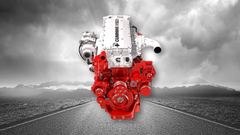
PACCAR PX6 — the Short-Lived 6.7-Liter Entry-Level Engine – six-cylinder engine of 6.7 litres, 200 to 325 hp, a short-lived entry-level line for Kenworth distribution trucks
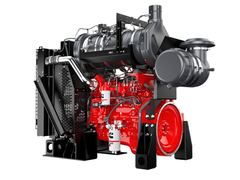
The PX6 is a 6.7-liter inline six spanning 200 to 325 hp with 520 to 750 lb-ft of torque. Like the PX-9, it is built by Cummins but sold under the PACCAR name, based on the Cummins ISB platform.
Read on 4 more paragraphs
PACCAR launched the PX6 alongside the PX-8 in 2010 for the Kenworth T270 (Class 6) and T370 (Class 7). It was replaced by the PX-7 before the 2013 model year to meet EPA on-board-diagnostics requirements then coming into force — meaning the PX6 stayed in the lineup for only around three years.
The PX6 powered light- to medium-duty distribution and municipal trucks from Kenworth, where maneuverability and a strong power-to-weight ratio mattered most.
The PX6 too meets the strict North American NOx limit in force from the 2010 model year only through a combination of cooled exhaust-gas recirculation, a diesel particulate filter and an SCR catalyst with AdBlue dosing; injection is handled by a high-pressure common-rail system. Like the related Cummins ISB platform, the inline six runs on wet cylinder liners that can be replaced individually during a major overhaul rather than swapping the whole block. A turbocharged engine of this class also runs charge-air cooling as standard, cooling the compressed intake air before combustion to reduce thermal loading.
Because of its short production run, used PX6 units are now uncommon; buyers should check parts availability before purchase, since the successor PX-7 has itself moved through several further engine generations and older PX6-specific parts are not consistently stocked in the aftermarket.
Sources: SpecCodex register, model data: PACCAR PX6
Models
Diesel engine in 3D section
Turn the model, look inside and click an assembly — each one is explained.
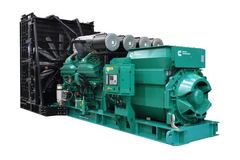
PX6 200
With the PX6 200, Cummins offers a model from the PX6 series. Production: 2012. The fuel is diesel. The rated output...
PX6 220
The PX6 220 from Cummins is part of the PX6 series. Production: 2012. The fuel is diesel. The rated output is 160.3...
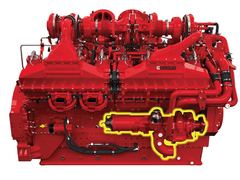
PX6 240
The PX6 series from Cummins includes the PX6 240. Production: 2012. The fuel is diesel. The rated output is 175.2...
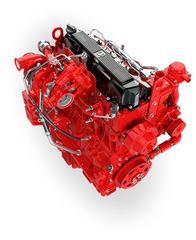
PX6 250
The Cummins PX6 250 belongs to the PX6 series. Production: 2012. The fuel is diesel. The rated output is 182.7 kW....
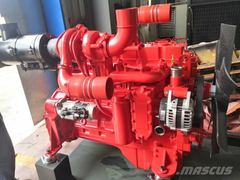
PX6 260
The Cummins PX6 260 is a model in the PX6 series. Production: 2012. The fuel is diesel. The rated output is 186.4...

PX6 280
With the PX6 280, Cummins offers a model from the PX6 series. Production: 2012. The fuel is diesel. The rated output...
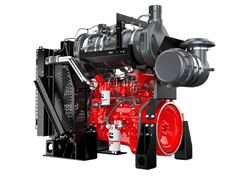
PX6 300
The PX6 300 from Cummins is part of the PX6 series. Production: 2012. The fuel is diesel. The rated output is 223.7...
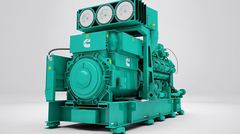
PX6 325
The PX6 series from Cummins includes the PX6 325. Production: 2012. The fuel is diesel. The rated output is 234.9...
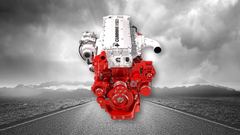
PX6 340
The Cummins PX6 340 belongs to the PX6 series. Production: 2012. The fuel is diesel. The rated output is 253.5 kW....
PX6 360
The Cummins PX6 360 is a model in the PX6 series. Production: 2012. The fuel is diesel. The rated output is 268.5...
