CLAAS Atos 230
1 model in this series
CLAAS Atos 230: compact utility tractor with a water-cooled 2,887cc three-cylinder diesel, 62 kW and 3,600 kg of front hydraulic lift capacity
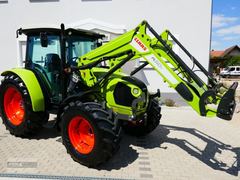
CLAAS is a German agricultural machinery manufacturer based in Harsewinkel in North Rhine-Westphalia, originally known above all for combine harvesters and harvesting technology, and has offered tractors under its own brand since acquiring Renault Agriculture in 2003. The Atos series covers the manufacturer's compact utility tractors for smaller and medium-sized farms.
Read on 3 more paragraphs
The Atos 230 is powered by a water-cooled three-cylinder diesel engine with 2,887 cc of displacement, producing 62 kW (84 hp) at 2,200 rpm. At 4,000 mm long, 2,580 mm high and at least 1,980 mm wide, the machine weighs 3,300 kg with a 2,300 mm wheelbase; front hydraulic lift capacity reaches 3,600 kg.
With three cylinders and just under 2.9 litres of displacement, the Atos 230 belongs to the smaller class of utility tractors used on mixed farms for grassland, yard and haulage work. Front hydraulic lift capacity of 3,600 kg also suits it for front-loader work and heavy mounted implements, without moving into the weight class of large field tractors.
When buying a used Atos 230, it is worth checking the front hydraulics and their connections, since this assembly takes heavy use on machines that see frequent front-loader work. Also worth checking are the condition of the clutch, the tightness of the three-cylinder engine's cooling system, and leaks at the rear hydraulics. Since the series descends from the Renault Agriculture takeover, it is also worth looking at service history and the condition of the wiring before buying.
Sources: SpecCodex-Register: Kennwerte des Modells CLAAS Atos 230, CLAAS (manufacturer)
Models
Tractor in 3D section
Turn the model, look inside and click an assembly — each one is explained.