Cargo Wit Other models
2 models in this series
Cargo Wit – other models: the collective page of chassis with third-party bodywork on the Fiat Ducato Maxi base, four-cylinder engine of around 3.0 litres, gross weight 3,500 kg
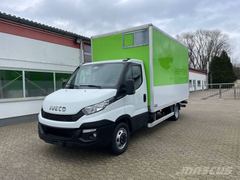
This page gathers models under the register designation Cargo Wit, which marks chassis fitted with bodywork by independent coachbuilders. Among the vehicles listed is a version based on the Fiat Ducato Maxi, the extended and raised panel van with a particularly large load area. The second version carries the chassis designation 35C15, completing this series in the register. Register designations of this kind group the bodies of a single coachbuilder regardless of which base vehicle they were built on.
Read on 3 more paragraphs
The register lists 2 versions here with displacement from 2,998 to 2,999 cm³ from four-cylinder engines, kerb weights from 2,300 to 2,665 kg, a uniform gross vehicle weight of 3,500 kg and a width of 2,270 mm.
Chassis such as the Ducato Maxi with third-party bodywork are common in Spain and Poland among coachbuilding firms that turn them into refrigerated vehicles, furniture vans or mobile workshops for commercial local transport; the uniform gross weight of 3,500 kg keeps these vehicles within the category B driving licence, without the need for a separate lorry licence.
For a used example, check the condition of the body and its mounting to the chassis, the tightness of the roof and side panels, the condition of the clutch and brake system, and corrosion on the chassis and wheel arches; also check the interior lining and any refrigeration or shelving fitted inside. Drivetrain parts run through the Fiat dealer network, and body parts through the respective coachbuilder.
Sources: SpecCodex register, model data: Cargo Wit (weitere Modelle)
Models
Van in 3D section
Turn the model, look inside and click an assembly — each one is explained.

