ESCs for drone motors
Manufacturers in this group:
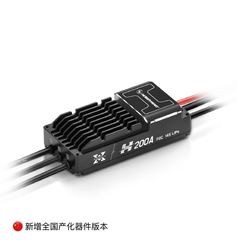
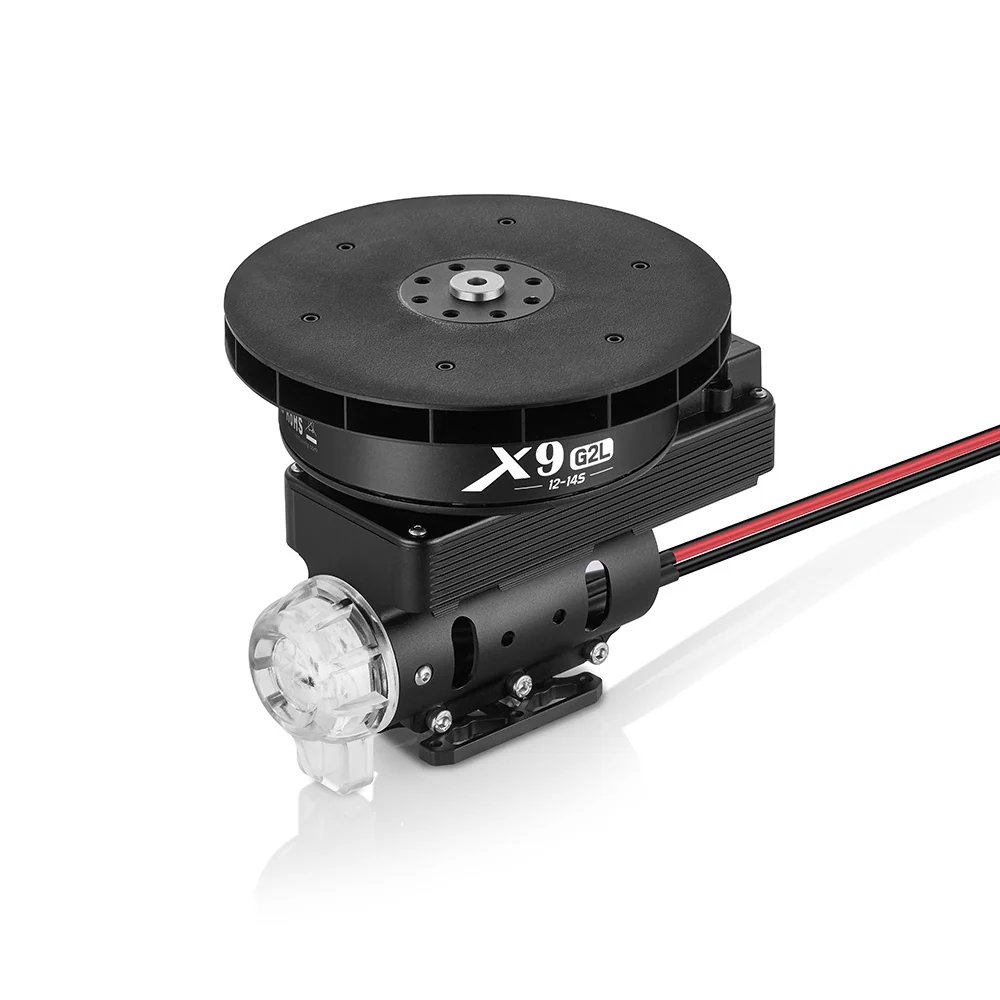 HOBBYWING XRotor X9 Plus G2L
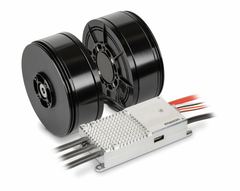
An ESC turns the flight controller's commands into motor speed by energising the windings of the brushless motor in the right sequence. There are single ESCs, 4-in-1 ESCs and integrated propulsion units combining motor, ESC and propeller mount.
Dimensions (mm)
External dimensions of the ESC or propulsion unit in millimetres. For integrated units they determine whether the unit fits the arm tube or motor mount.
Continuous current (A)
Current the ESC can deliver continuously per channel. It should exceed the motor's continuous current, with a margin for warm conditions and poor cooling.
Recommended propeller
Propeller for which the manufacturer designs and measures the integrated unit. A different propeller changes thrust, current and temperature.
Recommended thrust per axis (g)
Thrust the manufacturer recommends for continuous operation per motor axis, usually in hover. Multiplied by the number of axes it gives a sensible take-off mass for the drone.
Firmware
Software running on the ESC, such as BLHeli_S, Bluejay, AM32 or manufacturer firmware with FOC control. Open firmware can be configured by the user, manufacturer firmware is often tuned to the drive; null means not stated.
Weight (g)
Mass of the part in grams as stated by the manufacturer. Check whether cables, mounts or accessories are included, as manufacturers report this differently.
Integrated propulsion unit
True when motor, ESC and propeller mount form a single unit (e.g. Hobbywing X series). Only then are KV, thrust and the recommended propeller given.
Channels
Number of motors driven by one ESC: 1 for a single ESC, 4 for a 4-in-1 ESC. A 4-in-1 ESC saves weight and wiring, but a failure affects all four motors.
Motor KV
Only given for integrated propulsion units: speed constant of the built-in motor. For stand-alone ESCs the speed depends on the connected motor.
Maximum thrust (g)
Only for integrated propulsion units: highest thrust per unit with the recommended propeller. For sizing, the recommended thrust per axis is decisive.
Control protocol
Signal path from the flight controller to the ESC, such as PWM, DShot or a CAN bus (DroneCAN, Cyphal). Digital buses such as CAN also carry telemetry and are more robust against interference on long cables.
Cell count (S)
Permitted voltage range expressed as the number of cells in series. The ESC must tolerate the battery's fully charged voltage with a margin.
Peak current (A)
Maximum current permitted for a short time; the duration is given by the manufacturer (a few seconds for most Hobbywing units). Sizing is based on continuous current; the peak value only covers short load spikes.
Telemetry
Indicates whether the ESC reports speed, current, voltage or temperature back to the flight controller. Telemetry helps with troubleshooting and maintenance; null means not mentioned.
Continuous current must exceed the motor's continuous current, with a margin for heat. The cell count must cover the battery's fully charged voltage. Small FPV drones typically use 4-in-1 ESCs with BLHeli_S, Bluejay or AM32; heavy multirotors use single ESCs or integrated units with CAN bus and telemetry. A CAN connection pays off with long cables and when speed, current and temperature are to be monitored. Integrated units save tuning effort but tie you to the manufacturer's propeller recommendation.
Peak currents apply only briefly; the duration is given by the manufacturer (a few seconds for most Hobbywing units). Sizing is based on continuous current.
The former part type “antriebseinheit” has been merged into “regler” with the attribute “integriert”.
What is a 4-in-1 ESC?
A single board that drives four motors. It saves weight and wiring, but if it fails the whole board must be replaced.
Do I need ESC telemetry?
Not necessarily for hobby flying. On professional drones it helps to detect overload, bearing damage or wiring problems early.
Why do some ESCs list KV and thrust?
These are integrated propulsion units with a built-in motor; for stand-alone ESCs these values depend on the connected motor.