gearbox input shaft
gearbox input shaft: function, construction, power flow, typical wear patterns as well as notes on diagnosis, testing and maintenance in the drivetrain.
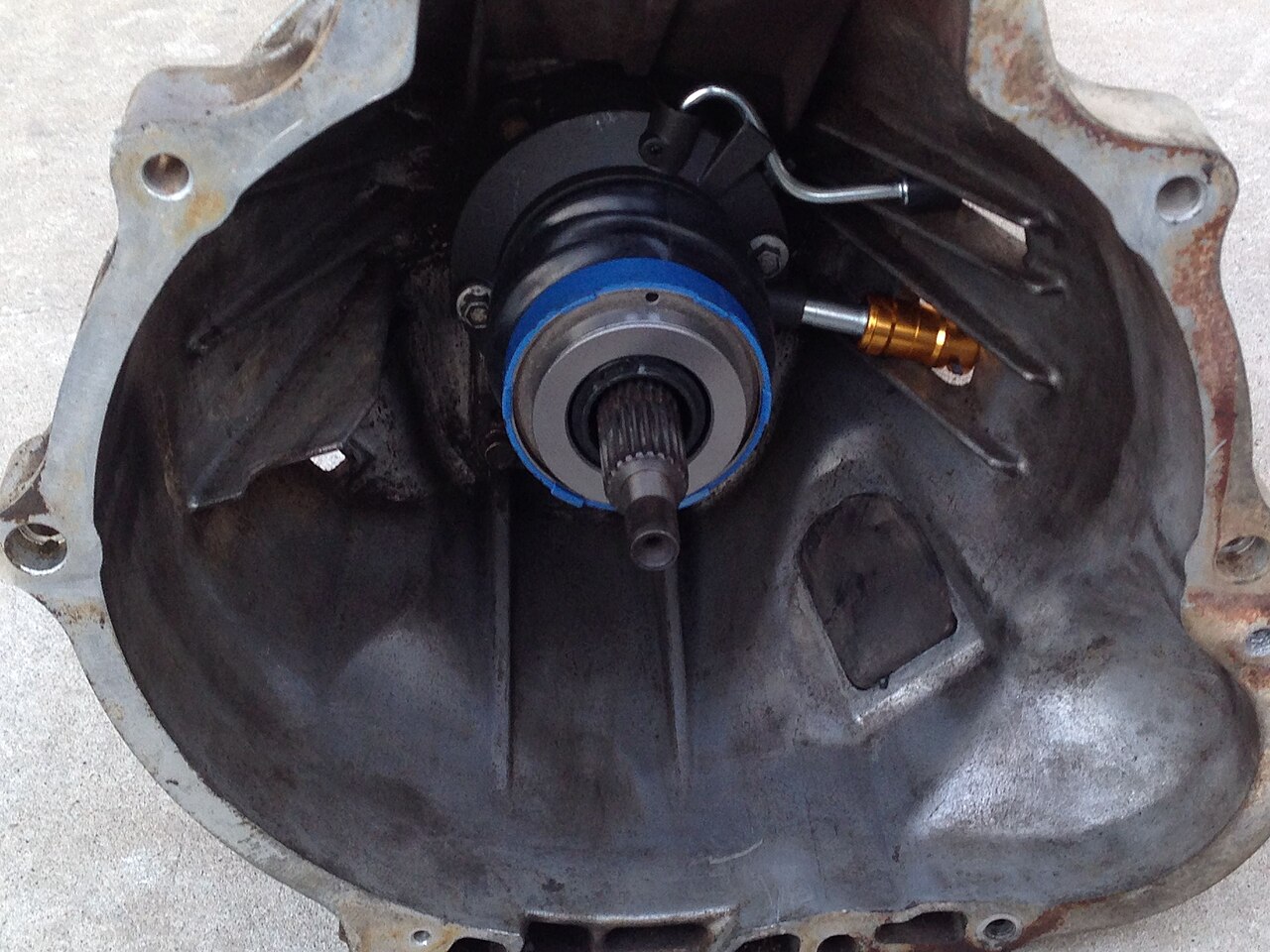
Photo: J.C. Fields (Talk) (Uploads), CC BY-SA 3.0, via Wikimedia Commons
The gearbox input shaft receives torque from the clutch or torque converter and directs it into the first gearbox stage. The term therefore clearly belongs to the subject area drive and gearbox and describes a concrete part of the power flow between power source and driving or working output.
For a reliable assessment, the component name alone is not sufficient. What matters is which parts in the respective operating condition transmit torque, which components only guide or shift, and which adjacent assemblies can produce a similar fault pattern.
gearbox input shaft: task in drive
The function is best understood through the power flow: input speed and torque are guided, translated, coupled or distributed by the respective type / design. In doing so, form‑locked tooth contacts, friction coupling, hydrodynamic flow or supported shafts can act together. It is important to distinguish between the actual function and its actuation. A component can be mechanically sound even though a cable pull, valve, actuator or an incorrect shaft position prevents its function. Conversely, a correctly controlled assembly can be internally worn. This separation is the basis of a clean diagnosis.
The most important components of gearbox input shaft
The typical construction includes shaft, gearings, gears, bearings, sealing points and, if applicable, pilot bearings. These parts do not form a loose side‑by‑side arrangement, but a coordinated system. Bearings fix shaft positions, gearings or friction surfaces transmit the load, shifting elements determine the active power path and seals as well as lubrication secure the operating conditions. Even small position changes due to bearing clearance, worn guides or loose fastenings can alter the contact of other parts. Therefore, during a repair not only the visibly damaged individual part should be assessed. Counterfaces, bearing locations, safeguards, spacer parts and adjacent connections belong to the cause analysis, especially if the damage could have arisen from misalignment or repeated impact loading.
Loads that the gearbox input shaft must withstand
Under load, torsion, alternating pull and push moments, speed changes and, depending on type, additional radial, axial or friction forces act. When switching from pull to push, the contact often migrates to the opposite tooth flanks or joining elements. Temperature influences lubricant, seals and component clearance. Shock‑like load intake, suddenly regained traction or incomplete engagement can generate load peaks that demand significantly more than steady operation. Therefore a fault picture must always be documented together with the operating condition: gear, direction of travel, load, temperature and speed often provide more information than a noise alone.
gearbox input shaft: the correct test procedure
The diagnostic work starts with simple, non‑destructive tests. Oil level and visible leaks, fastenings, external actuation, electrical or hydraulic actuation as well as adjacent joints and bearings are inspected, insofar as they belong to the type. Afterwards the fault is reproduced under safe conditions and the force path is narrowed down. Noises should be distinguished by engine speed, vehicle speed, gear, pull or push operation and temperature. With the unit opened, visual inspection of tooth flanks, friction surfaces, bearings, safety devices and fits is added. Measurement values for clearance, preload or pressure may only be compared with the specifications of the specific gearbox; values of similar models are not a reliable substitute.
What commonly goes wrong with the gearbox input shaft
Housing noise, gear mesh clearance and oil loss at the input are typical test points. Additionally, metal wear, unusual contact marks, oil loss, overheating or altered clearance are serious secondary findings. However, a single symptom rarely proves the cause. Body sound can be transmitted far over shafts and housings, and clearance adds up over multiple gear meshes, joints or bearing locations. Therefore the most meaningful aspect is whether the effect is reproducible only in certain gears, under pull or push, in curves, with a warm unit or during a specific actuation. A comparison with earlier behavior or with the opposite side of the axle can provide additional clues without prematurely claiming a single defect.
What matters in the maintenance and upkeep of gearbox input shaft
Clean lubrication, correct oil level, free venting and sealed housing create the basic conditions for a reliable drive. Which lubricant, what fill amount and which maintenance interval apply, however, depend on the design and must come from the manufacturer documentation. During disassembly, the installation position, markings, spacers, safety devices and sequences should be documented. Components with mating worn surfaces should be evaluated together. A new part on a heavily worn opposing surface can quickly become noticeable again. After repair, the function should first be tested under light load and then specifically in the operating condition in which the original fault occurred.
How gearbox input shaft fits into the entire drivetrain
The most important practical principle is to mentally follow the entire drivetrain from the engine to the wheel or work take‑off. Each stage can change speed, torque, direction of rotation or shaft position and thereby influence the symptoms of another stage. An audible noise at the gearbox can, for example, be introduced by a universal joint; conversely, internal bearing play outside the housing can be felt as vibration. Good diagnosis therefore separates cause, transmission path and perceived symptom. Where the manufacturer specifies adjustment values, wear limits or test procedures, these specifications take precedence. Deliberately, no generic dimensions, pressures, torques or limits are mentioned that could not be reliably substantiated without the exact design.
Frequently asked questions
Published 2026-10-13 · Source: Redaktion SpecCodex
→ Drive and transmission — terms and articles
