Massey Ferguson MF-765-MK II
6 models in this series
Massey Ferguson MF-765 Mk II – the range of the four-cylinder tractor in several production variants (including /2434-61, /2434-63, /2434-64), 46 kW from 3,330 cm³, 1,900 kg unladen weight
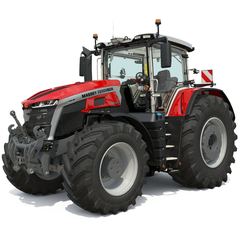
The Massey Ferguson MF-765 Mk II is a range listed in the register under several designations differing in a numeric suffix – as MF-765-MK 11/2434, as MF-765-MK II, MF-765-MK II/2434, and with the suffixes /2434-61, /2434-63 and /2434-64. Massey Ferguson was formed in 1953 from the merger of Massey-Harris with Harry Ferguson's tractor company and has belonged to AGCO since 1994.
Read on 3 more paragraphs
The register lists here 6 versions with 46 kW from a four-cylinder engine of 3,330 cm³, an unladen weight of 1,900 kg, a gross vehicle weight of 2,100 kg and widths from 1,834.5 to 2,000 mm.
With around 46 kW, the MF-765 Mk II sits in the mid power class of classic field tractors and was used for soil cultivation, transport work and driving mounted implements through the PTO on medium-sized farms. The 3,330 cm³ four-cylinder was a widely used unit in this power class and served in several Massey Ferguson ranges of the 1970s and 1980s.
On used examples, engine condition and compression of the four-cylinder unit, the clutch and gearbox, and the hydraulic pump and cylinders all matter; as the different production variants are listed inconsistently in the register, it is worth comparing the nameplate and frame number with the actual equipment before buying. Given an age of several decades, the frame and axles should also be checked for rust and the brakes and steering for play before the tractor returns to regular work.
Sources: SpecCodex register, model data: Massey Ferguson MF-765 Mk II, Massey Ferguson (AGCO, Hersteller)
Models
Tractor in 3D section
Turn the model, look inside and click an assembly — each one is explained.
MF-765-MK II
The 1961 Massey Ferguson MF-765-MK II is an industrial tractor derived from the brand's agricultural sister model....
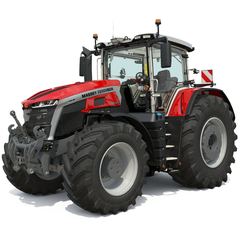
MF-765-MK II/2434-63
With the MF-765-MK II/2434-63, Massey Ferguson offers a model from the MF-765-MK II series. Production: 1963. The...
MF-765-MK 11/2434
Between 1961, Massey Ferguson built the Massey Ferguson MF-765-MK 11/2434 as a tractor from the MF-765-MK II series....
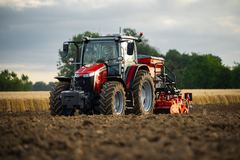
MF-765-MK II/2434
The Massey Ferguson MF-765-MK II/2434 is a tractor from the MF-765-MK II series, built in 1961-1962. The engine...
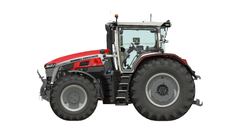
MF-765-MK II/2434-61
Between 1961, Massey Ferguson built the Massey Ferguson MF-765-MK II/2434-61 as a tractor from the MF-765-MK II...
MF-765-MK II/2434-64
The Massey Ferguson MF-765-MK II/2434-64 is a tractor from the MF-765-MK II series, built in 1964. Fitted is a...
