Kramer Werke Other models
5 models in this series
Kramer-Werke – other models: from the post-war four-wheel-drive tractor to the wheel loader – 7030, 7035 and KL35T from Überlingen, 55 to 115 kW, four-cylinder engines of 3,619 to 4,038 cm³
This page gathers Kramer-Werke machines the register could not assign to a named range – from classic tractors to a modern wheel loader. Kramer-Werke was founded in 1948 in Überlingen on Lake Constance; in the 1950s and 1960s the company built four-wheel-drive tractors notable for their articulated steering and permanent 4x4 drive, and from the 1970s increasingly shifted towards wheel loaders and telehandlers, still carried today under the KL (Kramer Lader) designation. Since 2007 Kramer-Werke has been part of the Wacker Neuson Group.
Read on 3 more paragraphs
The register lists here 5 versions with 55 to 115 kW from four-cylinder engines of 3,619 to 4,038 cm³, unladen weights from 5,800 to 11,550 kg, gross weights from 7,000 to 12,500 kg, lengths from 4,880 to 6,275 mm and widths from 1,980 to 2,500 mm.
With its wheel loaders and telehandlers, Kramer occupies a niche segment alongside larger construction-machinery makers and is known chiefly in German-speaking countries and in agriculture for compact, manoeuvrable machines with quick-coupler systems; the classic 4x4 tractors of the 1950s and 1960s are today sought mainly by collectors.
On the classic tractors, what counts is the condition of the articulation joint and four-wheel drive, chassis corrosion and the originality of the implements; on the more modern wheel loaders and telehandlers, hydraulic cylinders, quick couplers, propshafts and operating hours come to the fore, with parts running through the Kramer or Wacker Neuson dealer.
Sources: SpecCodex register, model data: Kramer-Werke (weitere Modelle), Kramer-Werke (Wacker Neuson Gruppe, Hersteller)
Models
Tractor in 3D section
Turn the model, look inside and click an assembly — each one is explained.
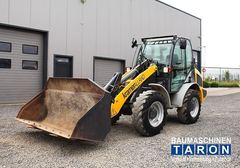
7030
Kramer Werke builds the 7030. According to the available register data, the vehicle dates from 2013. Dimensions:...

7035
7035 comes from the manufacturer Kramer Werke. According to the available register data, the vehicle dates from...
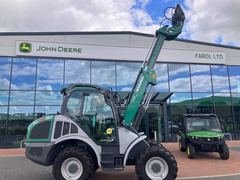
KL35T
Kramer Werke builds the KL35T. According to the available register data, the vehicle dates from 2014. Dimensions:...

Kramer 3507
Kramer 3507 comes from the manufacturer Kramer Werke. According to the available register data, the vehicle dates...
Kramer WerkeWeidemann 9080no photoWeidemann 9080
Kramer Werke builds the Weidemann 9080. According to the available register data, the vehicle dates from 2022....
