Europars Other models
9 models in this series
Europars – other models: the collective page of imported compact tractors outside the named ranges, from the 50 to the 1454, 19 to 108 kW, mostly diesel engines
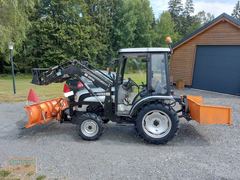
This page gathers tractors the register lists under the collective name Europars, not assigned to a named range, from small types such as the 50 and 254 through the 404 and its 404 (OSTMCO) variant to the large 1454. Europars stands in the register for imported compact tractors of varying origin grouped under this name; the OSTMCO suffix on one model points to a further name involved in its production or distribution.
Read on 4 more paragraphs
The register lists here 9 versions with 19 to 108 kW, or 25 to 145 hp, mostly with diesel engines.
The wide span from under 20 to over 100 kW shows that both small yard tractors and stronger field tractors are gathered under this collective name, used for grounds maintenance, haulage and lighter fieldwork on smaller to mid-sized holdings.
Buying used, it first matters which factory and import route stand behind the specific model, since engine and components differ by origin; technically the clutch, hydraulics and the condition of cab and wings count, often the first wear points on imported compact tractors.
The Italian engine maker Lombardini has been part of the American Kohler group since 2014 and has since traded mainly under the Kohler Engines brand; parts and service for the fitted engines therefore remain available through this network, independent of the specific Europars importer. For PTO and lift, tractors in this power range generally follow the 540 rpm standard with a category I three-point hitch, and category II under ISO 730 on the more powerful versions.
Sources: SpecCodex register, model data: Europars Pozostale modele
Models
Tractor in 3D section
Turn the model, look inside and click an assembly — each one is explained.
254
The 254 comes from Europars. Production: 2017. The engine delivers 25 hp (19 kW). The engine is water-cooled. The...
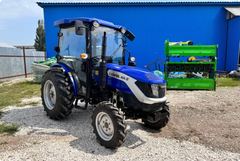
404
The 404 comes from Europars. The engine delivers 40 hp (30 kW). The engine is water-cooled. The model was built in...
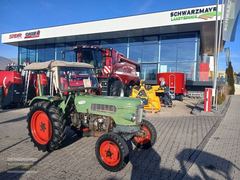
404 (OSTMCO)
The Europars 404 (OSTMCO) is a machine built by Europars. The engine delivers 40 hp (30 kW). The model was built in...
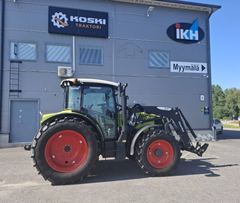
420
The 420 comes from Europars. The engine delivers 42 hp (30 kW). The engine comes from Lombardini. The model was...
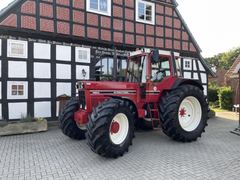
1200
The Europars 1200 is a machine built by Europars. The engine delivers 120 hp (89 kW). The engine is water-cooled....
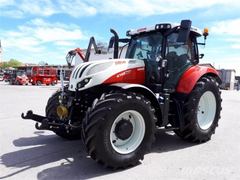
1454
The Europars 1454 is a machine built by Europars. The engine delivers 145 hp (108 kW). The engine is water-cooled....
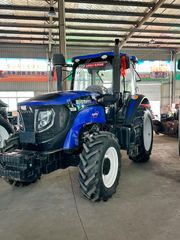
50
The Europars 50 is a tractor made by Europars. The engine produces 37 kW. Drive type: MFWD. It runs on diesel....
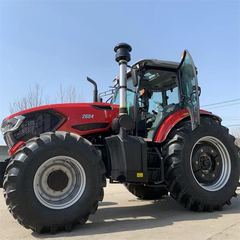
704
The 704 comes from Europars. The engine delivers 70 hp (52 kW). The engine is water-cooled. The model was built in...
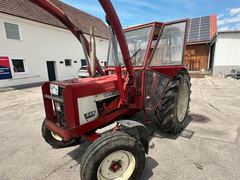
824
The Europars 824 is a machine built by Europars. The engine delivers 82 hp (61 kW). The engine is water-cooled. The...
