Donghong Attachment Hydraulic steel shear
4 models in this series
Donghong Attachment DHG-06: hydraulic steel shear attachment for excavators, cutting steel sections, sheet metal and reinforcement bar in metal recycling and demolition
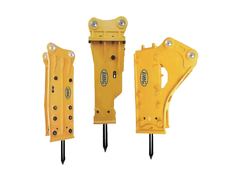
The DHG-06 is a hydraulic steel shear from the attachment range of Donghong Attachment. Steel shears of this kind are mounted on an excavator or other carrier and are used to cut steel sections, sheet metal and reinforcement bar.
Read on 3 more paragraphs
As an attachment with no drive of its own, a steel shear such as the DHG-06 draws its hydraulic power entirely from the carrier through the quick-coupler. Jaw opening, cutting force and dead weight are the key figures for steel shears, and they determine the size chosen to match the operating weight of the excavator in use.
Steel shears like the DHG-06 are used in metal recycling and in dismantling steel structures, for example cutting beams, pipes and reinforcement bar down to pieces that can be transported. The quick-coupler and hydraulic connection decide which carriers the attachment can be fitted to. Tools of this kind are often used at scrapyards and when dismantling steel-framed halls and structures, where the priority is breaking material down quickly on site.
Buying a used hydraulic steel shear means checking the blades for chipping and whether they can still be re-sharpened, the tightness of the hydraulic cylinders and the play in the jaw bearings. The quick-coupler mount should also be checked for wear and for matching the size of one's own carrier, since a shear without the right connection cannot be used at all.
Sources: SpecCodex-Register: Kennwerte des Modells Hydraulic steel shear DHG-06
Models
Excavator in 3D section
Turn the model, look inside and click an assembly — each one is explained.
Hydraulic steel shear DHG-06
Hydraulic steel shear model DHG-06 as listed on the official Donghong website. A hydraulic steel shear such as the...
Donghong AttachmentHydraulic steel shear DHG-02no photoHydraulic steel shear DHG-02
Hydraulic steel shear model DHG-02 as listed on the official Donghong website.
Donghong AttachmentHydraulic steel shear DHG-08no photoHydraulic steel shear DHG-08
Hydraulic steel shear model DHG-08 as listed on the official Donghong website.
Donghong AttachmentHydraulic steel shear DHG-minino photoHydraulic steel shear DHG-mini
Hydraulic steel shear execution DHG-mini as listed on the official Donghong page.
