Deckers Other models
5 models in this series
Deckers – other models: trailers from the 2000 and TAK 350 to the HYD.C.25-34, unladen weight 560 to 1,700 kg, gross weight up to 3.5 tonnes
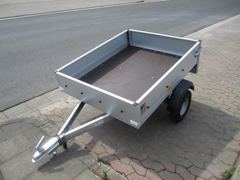
This page gathers the Deckers trailers the register could not assign to a range of their own – from the version simply listed as 2000 through the TAK 350 to the HYD.C.25-34. With gross weights up to 3.5 tonnes, all the models recorded fall into EU vehicle class O2, the classic band of braked car and utility trailers. Trailers may remain unbraked up to a gross weight of 750 kg; all the models listed here exceed that limit and run an overrun brake as class O2 requires, and they are towed on a category B licence or, for heavier combinations, category BE.
Read on 3 more paragraphs
The register lists here 5 versions with unladen weights from 560 to 1,700 kg, gross weights from 2,000 to 3,500 kg, lengths from 5,650 to 6,150 mm and widths from 1,830 to 2,560 mm.
Trailers of this class are the most widespread design of all: light enough for the BE driving licence category, sturdy enough for building materials, garden waste, machinery or small vehicles. They are used equally by trade businesses, landscaping and horticultural firms, farmers and private owners.
On a used example, rust on the chassis and drawbar, the condition of the overrun brake and linings, axle bearings and leaf springs, the drawbar eye and the electrics with its plug all count. On the HYD.C.25-34, also check the hydraulic lines and ram for leaks; spare parts for axles and brakes come from the usual trailer suppliers. It is also worth checking the overrun device's brake cables, which can stretch or rust over time, and the weld seams at the drawbar mount and axle mounting, where rust breaks through first.
Sources: SpecCodex register, model data: Deckers
Models
Trailer in 3D section
Turn the model, look inside and click an assembly — each one is explained.
TAK 350
The TAK 350 comes from Deckers. Production: 2011. The vehicle is 5,650 mm long and 2,560 mm wide. The unladen weight...
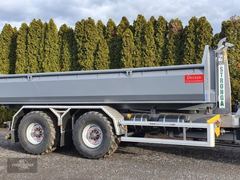
-
The manufacturer of this trailer is Deckers. According to the available register data, the recorded vehicles date...

2000
Deckers builds the 2000. According to the available register data, the vehicle dates from 1990. Dimensions: 1,830 mm...
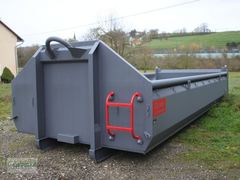
DECKERS
DECKERS comes from the manufacturer Deckers. According to the available register data, the recorded vehicles date...
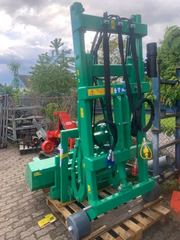
HYD.C.25-34
Deckers builds the HYD.C.25-34. According to the available register data, the vehicle dates from 1994. Dimensions:...
