CRAWLER Other models
3 models in this series
Crawler – other models: the collective page of trailers listed under this designation, Batu 535 along with Izz 428 and Izz 458, 750 to 1,730 kg unladen weight, 1,600 to 2,600 kg gross weight, 4,200 to 7,370 mm length
This page gathers the trailers the register lists under the designation Crawler without assigning them to a named range – with only three entries this amounts to the whole programme listed here. The type names Batu 535, Izz 428 and Izz 458 do not follow a common scheme readable from the register. As with many smaller trailer brands, the programme is drawn from registration data, in which each model is listed individually with its technical values.
Read on 3 more paragraphs
The register lists here 3 versions with unladen weights from 750 to 1,730 kg, gross weights from 1,600 to 2,600 kg, lengths from 4,200 to 7,370 mm and widths from 2,050 to 2,500 mm.
With lengths of over seven metres and gross weights of up to 2.6 tonnes, the span runs from a more compact to a markedly larger braked version, built for heavier transport or machinery loads behind suitably rated tow vehicles. For registration behind a car, besides the trailer's gross weight the tow vehicle's rated towing capacity is also decisive, since it sets the real limit for the load towed.
On a used example at this size, the condition of axles and brakes, rust on frame and side rails along the full length, the state of the drawbar and jockey wheel, and lighting, tyres and rims all count in particular. Parts for such a small model count usually run through independent trailer workshops. On versions with an overrun brake, the adjustment of the brake linkage and the condition of the brake linings are also worth checking before the first drive.
Sources: SpecCodex register, model data: Crawler (weitere Modelle)
Models
Trailer in 3D section
Turn the model, look inside and click an assembly — each one is explained.
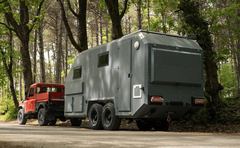
BATU 535
BATU 535 comes from the manufacturer CRAWLER. According to the available register data, the recorded vehicles date...
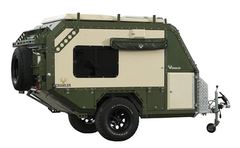
IZZ 428
CRAWLER builds the IZZ 428. According to the available register data, the recorded vehicles date from 2018 to 2019....
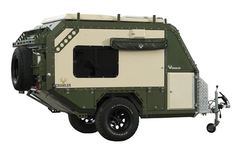
IZZ 458
IZZ 458 comes from the manufacturer CRAWLER. According to the available register data, the vehicle dates from 2025....
