AGCO Massey Ferguson MF 6700 Global Series
2 models in this series
AGCO Massey Ferguson MF 6700 Global Series – Global Series class for growth markets: MF 6712 and MF 6713, AGCO Power four-cylinder, 4,400 cm³, 97 kW, AdBlue
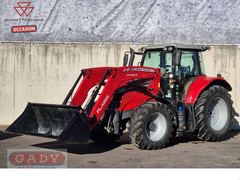
The MF 6700 Global Series extends AGCO's platform for growth markets with a class above the MF 5700 and shares its AGCO Power four-cylinder engine. The MF 6712 and MF 6713 models come with AdBlue exhaust aftertreatment as standard and represent the simple, rugged design of the Global Series range.
Read on 3 more paragraphs
The register lists 2 versions here with 97 kW from the four-cylinder diesel engine of 4,400 cm³ displacement, at 2,200 revolutions per minute. Kerb weight is 4,230 kg.
Within the Global Series family, the MF 6700 Global Series forms the more powerful alternative to the MF 5700 for farms in Asia, Africa and Latin America that need more pulling power without giving up the range's simple, easily maintained technology. It rounds out the offering between compact entry models and the marque's larger European standard tractors, suiting farms with larger acreage, heavier tillage or frequent trailer haulage.
When buying used, the AdBlue tank and lines and the particulate filter should be checked for correct operation, since a neglected exhaust aftertreatment system leads to power loss. Clutch, hydraulic pump and front-axle bearings also deserve attention, along with the wiring loom and control electronics under dusty field conditions; spare parts are supplied by AGCO through its international dealer network.
Sources: SpecCodex register, model data: Massey Ferguson MF 6700 Global Series, Massey Ferguson (AGCO, Hersteller)
Models
Tractor in 3D section
Turn the model, look inside and click an assembly — each one is explained.

