Caterpillar tractors: market overview by application profile
Crawler tractors in market comparison: important designs, application profiles, selection criteria, used market and typical misjudgements compactly explained.
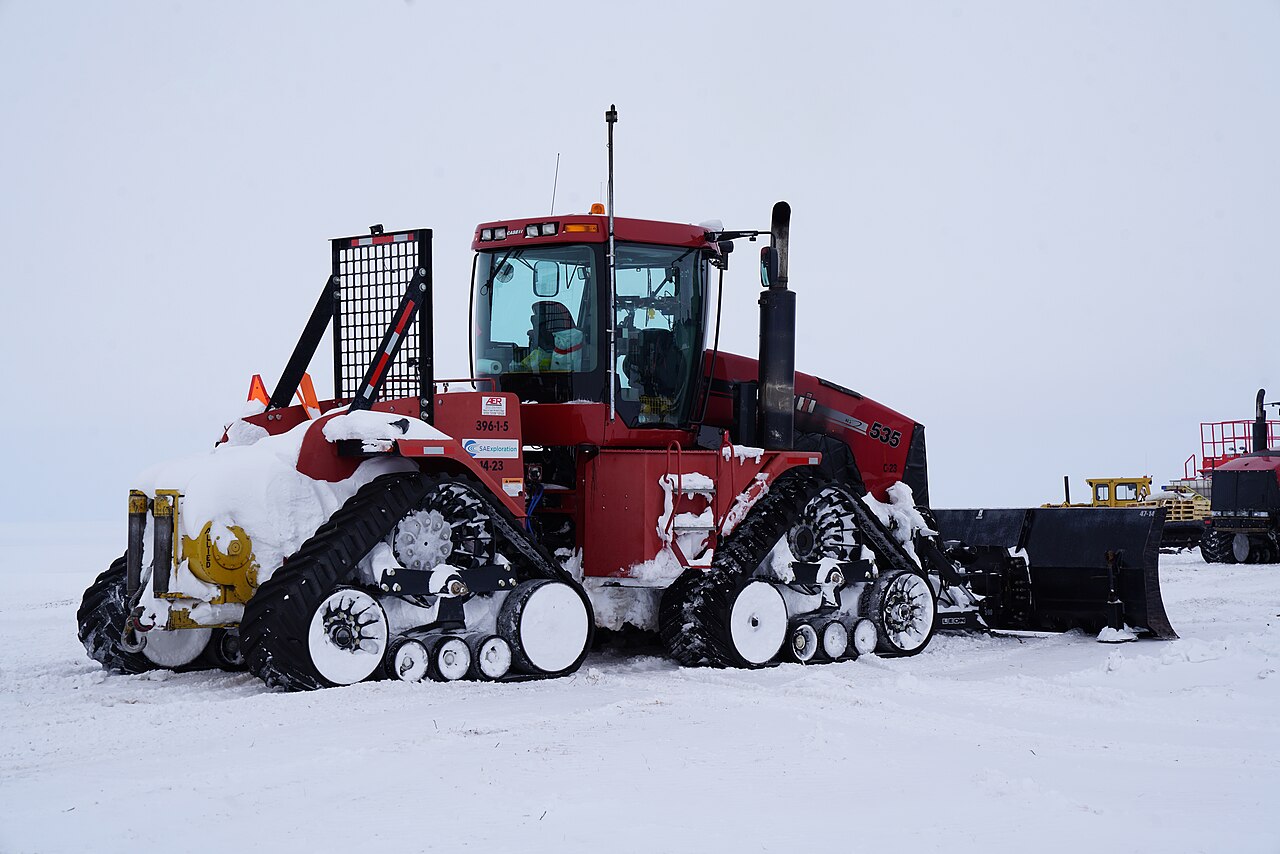
Photo: BLM Alaska, Public domain, via Wikimedia Commons
A market overview of crawler tractors is only useful if it does more than list brands and models. What matters is which designs actually solve the same task, which differences arise from the application profile, and which features are relevant for selection, operation and resale.
For operations on sensitive or difficult soils, a structured assessment of undercarriage, ground pressure, traction, transport, maneuverability and attachments is therefore worthwhile. The goal is to evaluate crawler concepts against wheeled machines on an application‑related basis. Figures for power, price or model years are deliberately not given in a blanket manner, because they are model-, market- and time‑dependent and can become misleading quickly without a concrete source.
What it’s about with crawler tractors
The term crawler tractors does not describe a completely uniform market. Suppliers classify their products according to their own series logic, regional designations and different target applications. For a useful comparison, it should therefore first be clarified which machines functionally really belong together. At the centre are undercarriage, ground pressure, traction, transport, maneuverability and attachments. A model that appears similar on paper can, because of chassis, superstructure, tool mounting, operating concept or logistics requirements, belong to a different sub‑market. A market overview should make such boundaries visible, rather than forcing every machine with a similar basic designation into a common ranking list. This protects against apparent precision and makes clear why manufacturers within the same product family offer several variants for different tasks.
The decisive comparison criteria for crawler tractors
During pre‑selection, technical criteria should always be related to the actual workday. For crawler tractors, undercarriage, ground pressure, traction, transport, maneuverability and attachments are especially relevant. In addition come operability, visibility, access to maintenance points, compatibility with existing equipment or superstructures, as well as the question of how easily the machine can be integrated into existing operational processes. A data sheet is only the starting point for this. Two machines can have similar key data yet differ markedly in everyday use, for example through setup effort, transport capacity, service access or the coordination between drive and work function. Market overviews become more robust when they form groups of criteria and explain which of them are particularly important for which users.
Which type / design of crawler tractors shape the market
A useful market segmentation starts with the work process. In crawler tractors, variants can differ mainly by type / design, operating environment, mobility, tool or superstructure concept and the expected utilization. For the market comparison, therefore, it is not decisive which model cites the highest individual value, but which construction fits the task. Typical dividing lines run between universal and highly specialized versions, between compact and productivity‑oriented design as well as between machines for frequent site changes and those for continuously intensive work. Comfort, automation and assistance systems also change the positioning. However, they should be understood as equipment and process features and not automatically as evidence of higher basic technical quality.
- type / design and working principle compare first
- operating environment and logistics conditions consider
- separate equipment of basic machine architecture
- do not mix special versions with standard models
How new and used offers for crawler tractors differ
The new market for crawler tractors mainly shows the current product strategy of the manufacturers, while the used market additionally includes older generations, discontinued series and regionally introduced models. Both markets therefore must not be overlaid one‑to‑one. With used machines, condition, documented maintenance, actual configuration, repair history and parts availability often become more important than the original positioning in the brochure. A rare variant can be technically suitable, but cause more effort in parts, diagnosis or resale. Conversely, an older, widely used model can remain attractive because of existing workshop experience. The market overview should describe these differences without giving blanket price or residual‑value promises.
How manufacturers and type / design differ in crawler tractors
Market presence in the market for crawler tractors cannot be read solely from the number of listed models. Some suppliers maintain few type / design with many configurations, others use several model codes or regional designations for similar technology. In addition, sales territories, dealer structures and local requirements can lead to certain variants being visible only in individual countries. For databases and buyers, the clean separation of brand, manufacturer, type / design, model, generation and variant is therefore decisive. Technically related parallel models should also not be merged without evidence. A good market overview states such uncertainties openly and avoids deriving technical equivalence from name similarity.
Service, parts and operation as a market factor for crawler tractors
The position of a machine in the market is decided not only at purchase. For operations on sensitive or difficult soils, how well crawler tractors can be operated over the planned service life counts. Workshop access, diagnostic possibilities, replacement and wear parts, documentation, mobile support and existing experience in the own operation can significantly influence practical suitability. Especially for specialized versions, it should be checked whether critical components across the entire machine are available from the manufacturer, from suppliers or only through certain distribution channels. A market overview can qualitatively classify these factors without promising concrete delivery times. The key is to recognise possible dependencies early and incorporate them into the selection.
Crawler tractors: in three steps to the shortlist
A good shortlist for caterpillar tractors develops step by step. First the work task is described, then unsuitable designs are excluded. In the next step, must criteria are separated from comfort and wish features. Afterwards suitable model series can be evaluated according to service access, existing infrastructure, control concept and used-market availability. Only then is the comparison of concrete models and equipment worthwhile. This approach prevents a single attractive data value from dominating the entire decision. Anyone comparing offers should also present exactly the same configuration and mark missing information as open. This keeps it traceable which differences are documented and where additional manufacturer or vehicle documents are needed.
For the final comparison step for caterpillar tractors, the remaining candidates should always be examined based on the same documents and the same application assumptions. Divergent equipment, unclear model codes or missing sources are marked as open points, instead of being replaced by estimates.
Frequently asked questions
Published 2026-10-21 · Source: Redaktion SpecCodex
