Thermal cameras for drones
Manufacturers in this group:
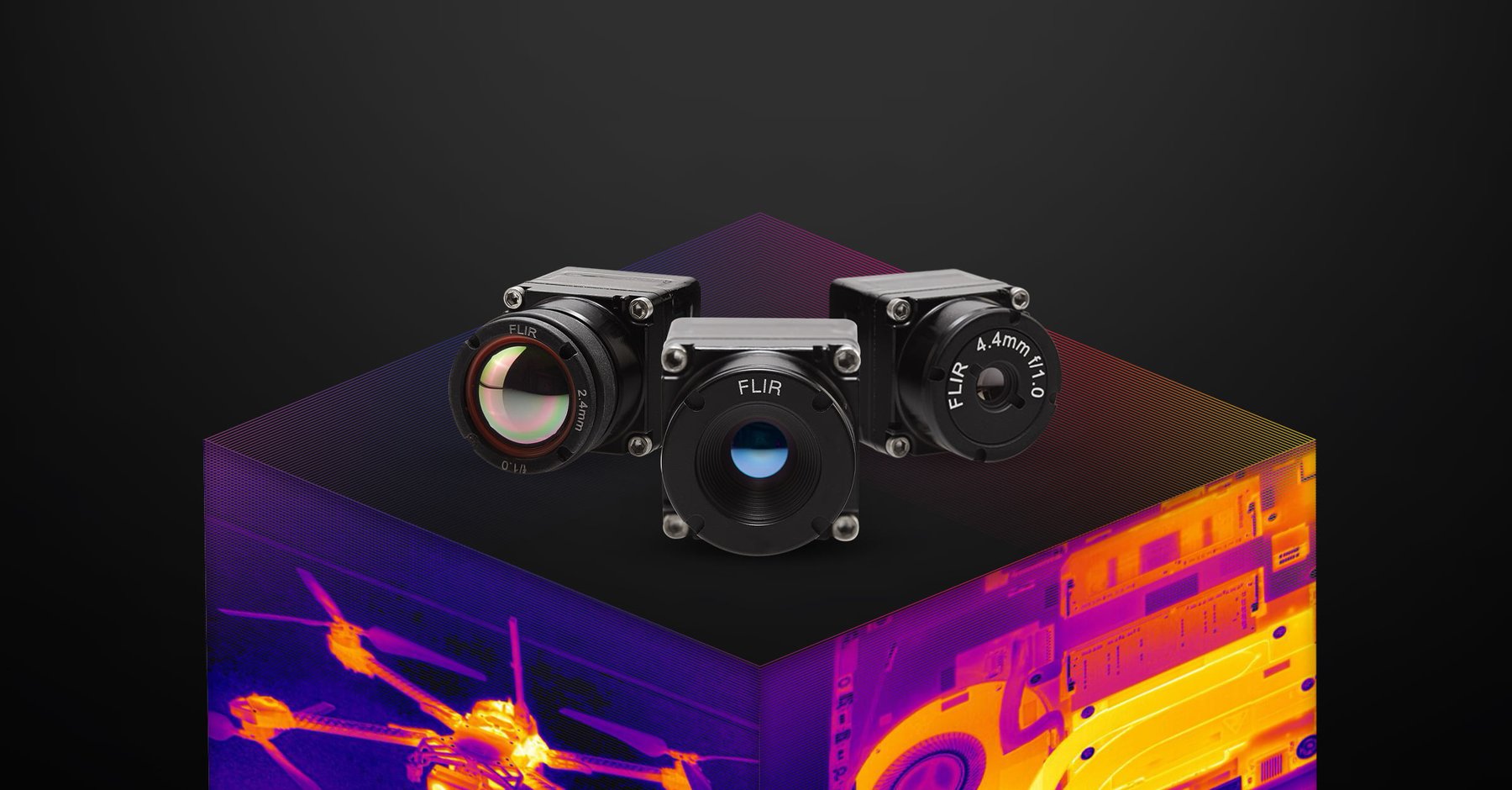 Teledyne FLIR Boson+ 640
Thermal cameras make temperature differences visible and are used for inspecting solar plants, power lines and buildings, for search and rescue and for firefighting. Drones usually carry uncooled microbolometers, often combined with a daylight and zoom camera.
Frame rate (Hz)
Thermal images per second. Low frame rates occur in export-friendly versions and are sufficient for inspection, but look jerky in fast flight.
Detector
Type of thermal sensor, on drones usually an uncooled microbolometer (e.g. VOx). Cooled detectors are more sensitive but heavier and more expensive.
Weight (g)
Mass of the part in grams as stated by the manufacturer. Check whether cables, mounts or accessories are included, as manufacturers report this differently.
NETD (mK)
Thermal sensitivity: the smallest temperature difference that stands out from noise, in millikelvin. Lower values are better; manufacturers often state it at a specific aperture and temperature.
Pixel pitch (µm)
Distance between detector pixels in micrometres. Smaller pixels allow more compact optics; larger pixels collect more radiation.
Radiometric
True when the camera stores a temperature value for each pixel. Only radiometric images are suitable for measurement reports, for example in solar or building inspection.
Visible-light camera
Additional visible-light camera in the same unit. It helps to relate thermal images to objects.
Spectral range (µm)
Wavelength range the detector covers, for uncooled cameras usually long-wave infrared (LWIR). Other ranges serve special tasks such as gas detection.
Thermal resolution
Pixel count of the thermal sensor. Higher resolution resolves smaller temperature differences at greater distances, such as individual solar cells or line sections.
Zoom
Magnification, given separately for the visible and thermal channels and as optical or digital. Thermal channels usually offer only digital zoom, which adds no extra detail.
For measurement reports the camera must be radiometric, i.e. store a temperature value for each pixel. Higher thermal resolution and a low NETD show finer differences at greater distances. For inspections, an additional daylight camera helps relate thermal images to objects. The spectral range of common devices is long-wave infrared; special devices for other ranges serve tasks such as gas detection. Low frame rates are enough for inspection but look jerky in fast flight.
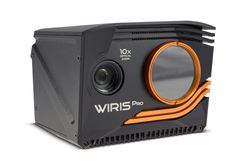
Export controls may apply to thermal cameras; the data only note this where the manufacturer states it (e.g. Teledyne FLIR with a US export classification, Workswell WIRIS Pro “non-ITAR”).
Recording people and property is subject to data protection law.
What does radiometric mean?
The camera stores the measured temperature for every pixel. Only then can temperatures be analysed afterwards.
What does the NETD value say?
The smallest temperature difference the camera can distinguish from noise. Lower values are better.
Does digital zoom add detail in thermal imaging?
No, it only enlarges the crop. More detail comes from higher resolution or a longer focal length.