SEPPI M. Other models
16 models in this series
SEPPI M. – other models: the collective page of mulchers and forestry heads from the BMS line through Mini-, Midi- and Maxiforst to Starforst and the direct-drive E10/E20
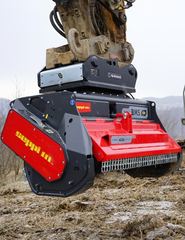
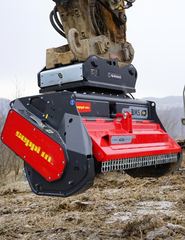
SEPPI M. is based in Caldaro (Kaltern) in South Tyrol and builds mulchers and forestry heads as attachments for tractors, excavators and compact loaders. This page gathers the models the register could not assign to a dedicated range: the base BMS line in several variants, the size-tiered forestry series running from Microforst through Mini-, Midi- and Maxiforst to Starforst, and the direct-drive E10 direct and E20 direct models.
Read on 3 more paragraphs
The register lists 16 versions here, from the compact BMS and Mini-BMS mulchers through the PTO-driven Microforst to the larger forestry heads of the Maxiforst and Starforst class and the hydraulically direct-driven E10 and E20 models.
SEPPI M. mulchers and forestry heads are used to maintain embankments, roadsides and woodland, to clear scrub regrowth, and to shred branches, bushes and weaker stands of trees on the spot, without the material having to be hauled away. The tiered sizes are matched to the power of the carrier vehicle, from a compact loader up to a powerful forestry tractor.
When buying a used unit, the key points are the condition of the hammers or knives and their mountings, rotor bearings and belt or gear drive, and on direct-drive models the tightness of the hydraulic motor, plus the housing and skids for stone-impact damage. The PTO shaft and its guard should also be checked, along with the availability of wear parts such as knives and hammers through the dealer network.
Sources: SpecCodex-Register: Kennwerte der Modelle SEPPI M. (weitere Modelle), SEPPI M. (Hersteller)
Models
Harvester in 3D section
Turn the model, look inside and click an assembly — each one is explained.
BMS
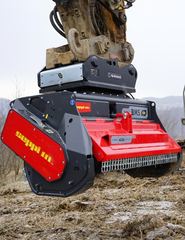
The SEPPI M. BMS is an attachment in the Mulchers & forestry heads category. It is a mulcher or forestry head used...

BMS-F
The SEPPI M. BMS-F belongs to the Mulchers & forestry heads category. It is a mulcher or forestry head used to shred...

E10 direct
The SEPPI M. E10 direct is part of the Mulchers & forestry heads category from SEPPI M.. It is a mulcher or forestry...
SUPER-BMS
The SEPPI M. SUPER-BMS is part of the Mulchers & forestry heads category from SEPPI M.. It is a mulcher or forestry...
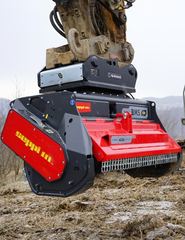
BMS
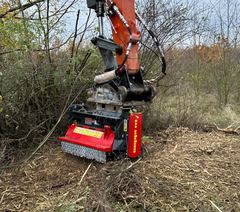
BMS-F
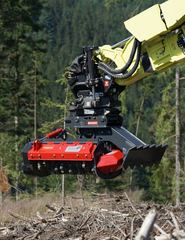
BMS-L
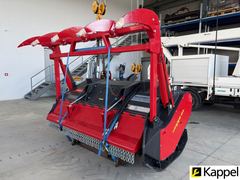
E20 direct
MAXIFORST
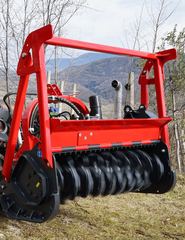
MICROFORST pto
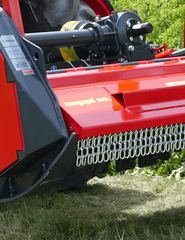
MIDIFORST

MIDIFORST dt

MINI-BMS
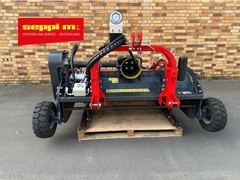
MINIFORST
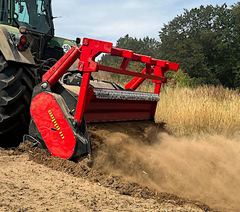
STARFORST